


Hi, I'm Sarah Mitchell. I've spent years researching metabolic health to help women reclaim their energy and balance their hormones naturally. Welcome to BioHealth Source.
If you’re looking for the best protein sources for blood sugar control, you’re already thinking about your health in the right way — because protein is one of the most powerful tools available for stabilizing glucose, reducing cravings, and reversing insulin resistance naturally.
Most conversations about blood sugar focus on what to remove from your plate — cut the sugar, reduce the carbs, eliminate the white bread. But the research consistently shows that what you add matters just as much. And the single most powerful addition for blood sugar control is protein.
The best protein sources for blood sugar don’t just fill you up. They actively change how your body processes every meal — slowing digestion, blunting glucose spikes, and triggering hormones that keep your blood sugar stable for hours after eating.
In this guide, we’ll break down exactly how protein works to control blood sugar, compare the top animal and plant-based options, reveal the hidden dangers of processed proteins, and give you a practical Top 10 list you can start using at your next meal.
If you’ve already read our guide on prediabetes diet, you know that protein is one of the 5 golden rules. This post goes deeper — into the science, the sources, and the strategy.
The Science: How the Best Protein Sources for Blood Sugar Work
The Anchor Effect
Think of protein as an anchor for your meal.
Every time you eat carbohydrates, glucose enters your bloodstream and your blood sugar rises. How fast and how high that rise goes depends largely on what else is in your stomach at the same time. When you choose the best protein sources for blood sugar and include them in every meal, you fundamentally change the equation.
Protein slows gastric emptying — the rate at which food moves from your stomach into your small intestine. This means glucose from carbohydrates is released into your bloodstream gradually, over a longer period, instead of flooding in all at once. The result is a dramatically flatter post-meal glucose curve — less spiking, less crashing, and more stable energy.
This is the anchor effect: protein physically anchors the carbohydrates in your meal, preventing them from converting into blood sugar too quickly.
To see exactly what this looks like in numbers, read our guide on blood sugar after eating — it shows the difference between a high-protein meal and a carbohydrate-only meal on post-meal glucose.
Protein and Glucagon — The Balancing Hormone
Most people know about insulin — the hormone that lowers blood sugar. But fewer people know about glucagon — insulin’s counterpart, and one of the most important hormones for metabolic stability.
When you eat the best protein sources for blood sugar, your pancreas releases glucagon. Glucagon’s job is to prevent blood sugar from dropping too low — it signals the liver to release stored glucose when your cells need energy between meals. This creates a natural buffer: insulin brings blood sugar down after eating, glucagon keeps it from dropping too far between meals.
This is why high-protein meals produce such stable, sustained energy. You’re not just slowing the glucose spike — you’re activating a hormonal system designed to keep your blood sugar in a steady, balanced range for hours.
Protein and Insulin Sensitivity
Choosing the best protein sources for blood sugar supports long-term insulin sensitivity in two key ways. First, protein-rich meals require less insulin to process than carbohydrate-heavy meals — reducing the overall burden on your pancreas over time. Second, protein supports muscle building and maintenance, and muscle tissue is your body’s primary glucose disposal site. The more muscle you have, the more efficiently your body clears blood sugar after every meal.
For a deeper understanding of how insulin sensitivity works and what happens when it breaks down, read our guide on the early signs of insulin resistance.
Animal vs Plant — Which Are the Best Protein Sources for Blood Sugar?
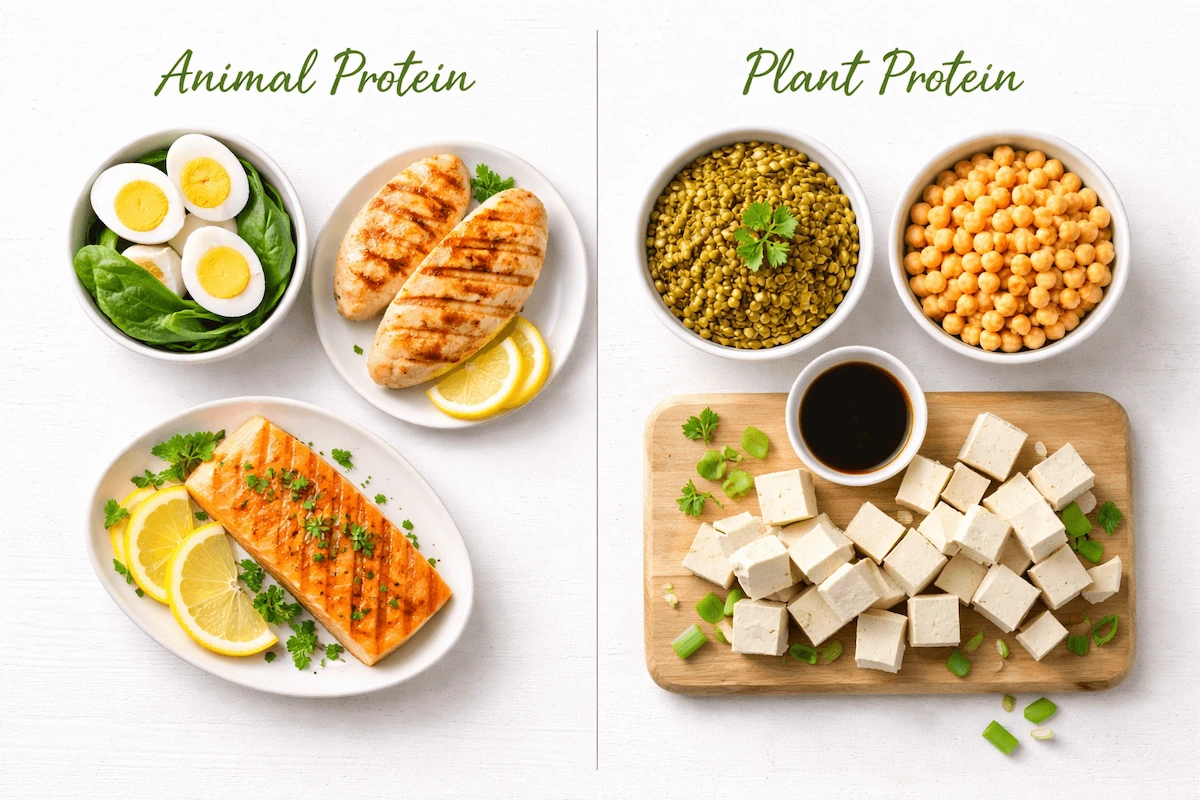
One of the most common questions about protein and blood sugar is whether animal or plant protein is better. The honest answer is: both have real advantages, and the best approach uses both strategically.
Animal Proteins
Animal proteins — eggs, chicken, turkey, fish, seafood, Greek yogurt, cottage cheese — are complete proteins, meaning they contain all nine essential amino acids your body needs. They have virtually zero glycemic impact on their own, making them among the best protein sources for blood sugar control available.
Fatty fish like salmon, mackerel, and sardines offer an additional benefit: omega-3 fatty acids, which reduce inflammation — one of the key drivers of insulin resistance. Including fatty fish 2 to 3 times per week is one of the most evidence-backed dietary strategies for metabolic health.
Plant Proteins
Plant proteins — lentils, chickpeas, black beans, edamame, tofu, tempeh, quinoa — come packaged with fiber, which makes them uniquely powerful best protein sources for blood sugar despite containing carbohydrates.
Here’s the key insight: the fiber in legumes slows the digestion of their own carbohydrates so effectively that lentils, for example, have a glycemic index of just 32 — far lower than white rice (72) or white bread (75). The carbohydrate and the fiber essentially cancel each other out from a blood sugar perspective.
This is why legumes are among the best protein sources for blood sugar in a prediabetes diet — they deliver protein, fiber, and slow-releasing energy in one package. Our guide on the best foods for insulin resistance covers legumes in detail.
The Practical Strategy
For optimal blood sugar control, combine both sources strategically:
- Build your main meals around animal protein for maximum satiety and zero glycemic impact
- Include legumes 3 to 4 times per week as a protein-and-fiber combination
- Use plant proteins like edamame and tofu as versatile additions to salads, stir-fries, and snacks
Pair your protein with the best low-glycemic carbohydrates for the most effective blood sugar control
Top 10 Best Protein Sources for Blood Sugar Control
Here are the best protein sources for blood sugar — ranked by their metabolic impact, protein content, and practical usability in daily meals.
1. Eggs
Eggs are one of the most complete, versatile, and blood-sugar-friendly protein sources available. Two large eggs provide approximately 12 grams of protein with zero carbohydrates and zero glycemic impact. The fat in egg yolks further slows digestion, making eggs one of the best protein sources for blood sugar at breakfast — producing sustained morning energy without a glucose spike.
2. Salmon and Fatty Fish
Salmon, mackerel, sardines, and trout combine high-quality complete protein with anti-inflammatory omega-3 fatty acids. A 150g serving of salmon provides approximately 30 grams of protein. Omega-3s reduce systemic inflammation — a key driver of insulin resistance — making fatty fish one of the best protein sources for blood sugar and overall metabolic health.
3. Chicken and Turkey Breast
Lean poultry is a metabolic workhorse — high in protein, low in fat, and with zero carbohydrates. A 150g serving of grilled chicken breast provides approximately 45 grams of protein. Its neutral flavour makes it one of the most versatile of all the best protein sources for blood sugar, easy to include in any meal.
4. Greek Yogurt (Unsweetened)
Greek yogurt provides approximately 17 to 20 grams of protein per 200g serving — nearly double that of regular yogurt. It also contains probiotics, which support gut health and have emerging evidence for improving insulin sensitivity. Always choose unsweetened — flavoured Greek yogurts often contain as much added sugar as a dessert, which completely undermines their value as one of the best protein sources for blood sugar.
5. Cottage Cheese
Cottage cheese is one of the most underrated of all the best protein sources for blood sugar. A 200g serving provides approximately 24 grams of protein with minimal carbohydrates. Its high casein content makes it a slow-digesting protein — ideal as an evening snack to support stable overnight blood sugar.
6. Lentils
Lentils are the gold standard of plant-based best protein sources for blood sugar. One cup of cooked lentils provides 18 grams of protein and 16 grams of fiber — a combination that produces one of the lowest post-meal glucose responses of any carbohydrate-containing food. Their glycemic index of 32 makes them dramatically more blood-sugar-friendly than grains or starchy vegetables.
7. Chickpeas and Black Beans
Like lentils, chickpeas and black beans are excellent best protein sources for blood sugar — delivering protein and fiber together. The fiber blunts the blood sugar impact of the carbohydrates they contain. Half a cup of chickpeas provides approximately 7 grams of protein and 6 grams of fiber. They’re a cornerstone of the Mediterranean diet, one of the most consistently evidence-backed dietary patterns for metabolic health.
8. Tofu and Tempeh
Tofu and tempeh are complete plant proteins — rare among plant sources — making them standout best protein sources for blood sugar for those following a plant-based diet. Tempeh in particular is fermented, providing probiotic benefits alongside its protein content. A 100g serving of tempeh provides approximately 19 grams of protein.
9. Edamame
Edamame — young soybeans — provide approximately 11 grams of protein per half cup, along with fiber and a range of micronutrients. They’re one of the most convenient of all the best protein sources for blood sugar, requiring no preparation beyond brief cooking. Their glycemic index is extremely low, making them one of the best snack choices for blood sugar management.
10. Canned Tuna and Sardines
Canned tuna and sardines round out the list of best protein sources for blood sugar as the most accessible and affordable options available. A can of tuna provides approximately 25 grams of protein with zero carbohydrates. Sardines add omega-3 benefits alongside the protein. Both are shelf-stable, require no cooking, and can be added to salads, wraps, or eaten directly.
Protein Sources to Limit or Avoid
Not all proteins are equal — and some marketed as “high-protein” choices actively work against metabolic health.
The Hidden Danger of Processed Proteins

Processed meats — deli meats, bacon, sausages, hot dogs, salami, and most packaged “protein” snacks — are among the worst choices when looking for the best protein sources for blood sugar, despite their protein content.
The problems are threefold. First, sodium: processed meats are extremely high in sodium, which raises blood pressure and promotes fluid retention — compounding the cardiovascular risks already associated with insulin resistance. Second, nitrates and nitrites: these preservatives have been linked in multiple studies to increased systemic inflammation and impaired insulin signaling. Third, saturated fat quality: the fat in processed meats is predominantly inflammatory, unlike the beneficial fats found in fatty fish or eggs.
The research is clear: regular consumption of processed meats is associated with significantly higher risk of type 2 diabetes — independent of other dietary factors. The protein in a grilled chicken breast and the protein in a hot dog are not metabolically equivalent.
For a complete picture of which foods support and which foods undermine insulin sensitivity, read our guide on the best foods for insulin resistance.
Practical Guidelines for Using the Best Protein Sources for Blood Sugar
How Much Protein Per Meal?

Research consistently supports aiming for 20 to 30 grams of protein per meal for optimal blood sugar control and satiety. This amount is sufficient to trigger the anchor effect, activate glucagon release, and provide sustained satiety for 3 to 4 hours. Research published in the American Journal of Clinical Nutrition shows that strategically increasing protein can significantly flatten your daily glucose curve — with participants seeing measurable improvements in blood sugar response within weeks of consistent dietary changes.
Going significantly above 40 grams per meal offers diminishing returns — excess protein can be converted to glucose through a process called gluconeogenesis, though this effect is modest in most people.
Timing Matters — Protein First
Just as fiber-first reduces post-meal glucose spikes, eating protein early in your meal amplifies the anchor effect. Starting your meal with a few bites of any of the best protein sources for blood sugar — chicken, fish, or eggs — before moving to the carbohydrate portion of your plate produces a measurably lower glucose response.
This principle is at the heart of the fiber-first and protein-first approach we outlined in our prediabetes diet guide.
FAQ: The Best Protein Sources for Blood Sugar — Common Questions
Does whey protein spike blood sugar?
Whey protein has a minimal direct effect on blood sugar — it contains very few carbohydrates and a low glycemic index on its own. However, whey does stimulate a significant insulin response, which is beneficial for muscle recovery after exercise. For blood sugar management, unsweetened whey protein isolate is among the best protein sources for blood sugar in supplement form. Avoid flavored protein powders with added sugars.
Is collagen good for blood sugar?
Collagen protein has a very low glycemic impact and is a useful addition to a blood sugar-friendly diet. However, collagen is not a complete protein — it lacks tryptophan — so it should supplement rather than replace the best protein sources for blood sugar. Adding collagen to coffee or smoothies is a convenient way to increase protein intake without affecting blood sugar.
Can I eat too much protein with prediabetes?
For most people with prediabetes, higher protein intake is beneficial — not harmful. Aiming for 20 to 30 grams per meal and 1.2 to 1.6 grams per kilogram of body weight per day is a safe and effective range for most adults with prediabetes.
What is the best protein source for breakfast?
Eggs are the gold standard among the best protein sources for blood sugar at breakfast — complete protein, zero carbohydrates, and high satiety. Greek yogurt (unsweetened) and cottage cheese are excellent alternatives. Anchoring your morning meal in protein is one of the most impactful changes you can make for all-day glucose stability.
Is plant protein as effective as animal protein for blood sugar?
Both are effective best protein sources for blood sugar, but through slightly different mechanisms. Animal protein offers complete amino acids with zero glycemic impact. Plant protein — particularly legumes — combines protein with fiber, producing uniquely low post-meal glucose responses. Including both in your diet produces the best overall metabolic outcomes.
The Bottom Line
The best protein sources for blood sugar are not just a dietary preference — they are one of the most evidence-backed interventions available for anyone managing glucose, reversing prediabetes, or building long-term metabolic health.
The anchor effect, the glucagon response, the support for muscle mass and insulin sensitivity — these mechanisms explain why the best protein sources for blood sugar produce real, measurable improvements in glucose control when included consistently at every meal.
Start by anchoring every meal in a quality protein source from the Top 10 list. Aim for 20 to 30 grams per meal. Prioritize whole, minimally processed sources — eggs, fish, poultry, legumes, Greek yogurt. And eliminate processed meats from your regular rotation.
For a complete eating strategy that combines the best protein sources for blood sugar with the fiber-first approach and low-glycemic carbohydrates, read our complete prediabetes diet guide.
“When I work with people on their metabolic health, the first thing I tell them is this: stop thinking about what to remove and start thinking about what to add. Add protein to every meal. Make it the anchor. Everything else — the glucose stability, the reduced cravings, the sustained energy — follows from that one change. It sounds simple because it is. But simple doesn’t mean easy, and it certainly doesn’t mean ineffective.”
— Sarah Mitchell
Sources & Scientific References
American Diabetes Association (ADA): Standards of Care in Diabetes — Official clinical guidelines on nutrition therapy and lifestyle management for metabolic health.
Harvard T.H. Chan School of Public Health: Protein: Moving Closer to Center Stage — A deep dive into choosing healthy protein sources and their long-term impact on disease prevention.
National Institute of Diabetes and Digestive and Kidney Diseases (NIDDK): Insulin Resistance & Prediabetes — A fundamental resource explaining the biological connection between diet, muscle mass, and insulin sensitivity.
Mayo Clinic: Diabetes Diet: Create Your Healthy-Eating Plan — Expert guidance on meal planning and the importance of nutrient-dense protein in blood sugar management.
American Journal of Clinical Nutrition (Pan A. et al.): Red Meat Consumption and Risk of Type 2 Diabetes — A significant study highlighting the importance of choosing lean and unprocessed proteins over processed meats.
American Journal of Clinical Nutrition (Nuttall & Gannon): Effect of Dietary Protein on Blood Glucose Response — Clinical research proving that increasing dietary protein helps stabilize glucose levels in individuals with metabolic challenges.
Medical Disclaimer: The information provided on BioHealth Source is for educational and informational purposes only and does not constitute medical advice. Always consult with a qualified healthcare professional before making significant changes to your diet, exercise routine, or if you have questions regarding a medical condition.
Affiliate Disclosure: This post may contain affiliate links. If you click on one of these links and make a purchase, we may receive a small commission at no extra cost to you. This helps support our research and content creation. We only recommend products we truly believe in.