


Hi, I'm Sarah Mitchell. I've spent years researching metabolic health to help women reclaim their energy and balance their hormones naturally. Welcome to BioHealth Source.
Many people wonder what their blood sugar level after eating should be — and whether their numbers are normal. You eat a meal, feel fine, and assume everything is working as it should. But what’s actually happening inside your bloodstream in the hours after you eat tells a very different story about your metabolic health.
Post-meal blood sugar — also called postprandial glucose — is one of the most important and most overlooked markers of metabolic health. It rises after every single meal. How high it rises, and how quickly it comes back down, reveals exactly how well your body is handling glucose in real time.
In this guide, we’ll break down exactly what your blood sugar level after eating should be, what happens when it stays too high, and — most importantly — the most effective strategies for keeping your post-meal numbers in a healthy range.
What Happens to Blood Sugar After Eating?
Every time you eat, your digestive system breaks down carbohydrates into glucose — the primary fuel your cells use for energy. That glucose enters your bloodstream, causing your blood sugar level after eating to rise.
Understanding blood sugar after eating is essential for anyone managing their metabolic health.
In response, your pancreas releases insulin — the hormone that acts like a key, unlocking your cells so they can absorb the glucose and use it for energy. In a healthy metabolic system, this process happens efficiently: blood sugar rises after a meal, peaks within 30 to 60 minutes, and returns to baseline within 2 hours.
But when insulin sensitivity is impaired — as in insulin resistance or prediabetes — this process breaks down. The cells don’t respond to insulin efficiently, glucose stays in the bloodstream longer, and blood sugar level after eating remains elevated well beyond the normal window.
Over time, these repeated post-meal spikes cause damage to blood vessels, nerves, and organs — even before a formal diabetes diagnosis. This is why understanding your post-meal numbers matters so much.
If you’re not sure whether you might have insulin resistance, our guide on the early signs of insulin resistance covers the warning signs in detail.
Normal Blood Sugar Level After Eating — What the Numbers Mean
According to the American Diabetes Association (ADA), here are the standard post-meal blood sugar ranges:
| Time After Eating | Normal Blood Sugar Level | Prediabetes Range | Diabetes Range |
|---|---|---|---|
| 1 hour after eating | Under 140 mg/dL | 140–199 mg/dL | 200 mg/dL+ |
| 2 hours after eating | Under 140 mg/dL | 140–199 mg/dL | 200 mg/dL+ |
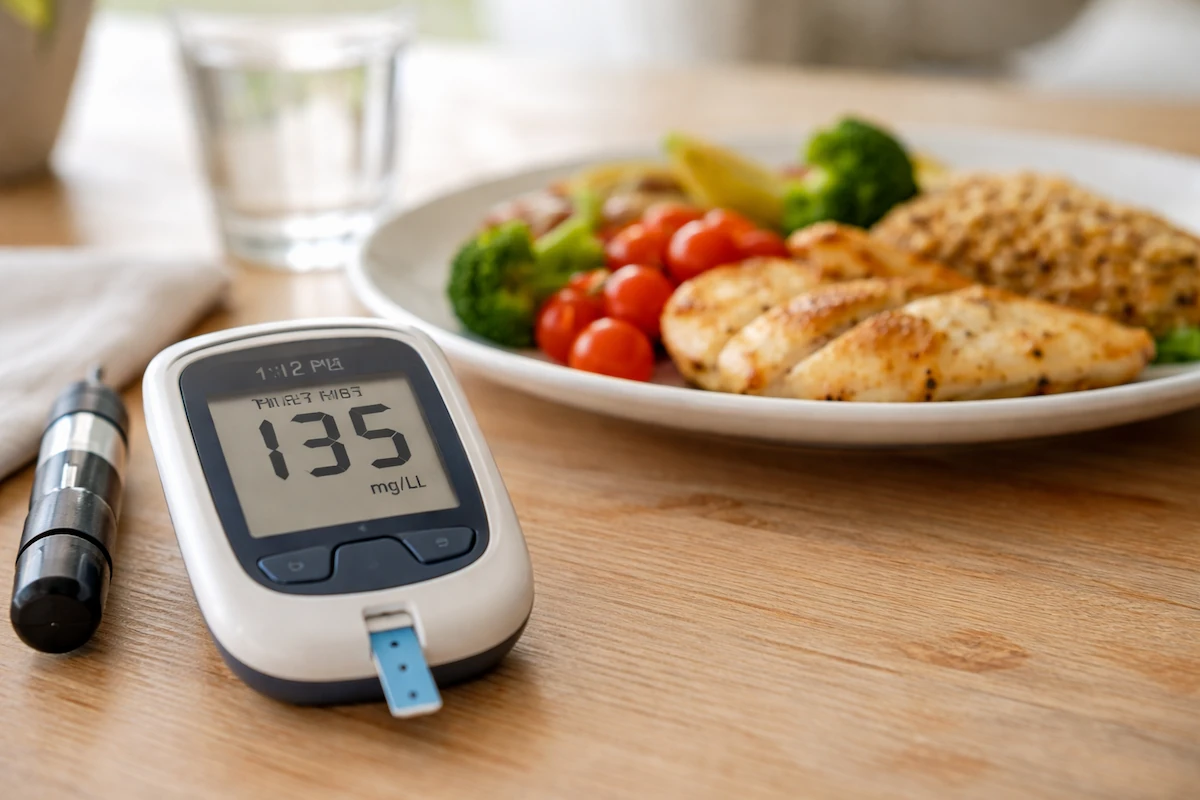
Knowing your normal blood sugar after eating is the first step to understanding your metabolic health.
But just like fasting blood sugar, the “normal” range isn’t the same as “optimal.”
Functional medicine practitioners and metabolic health researchers generally consider a blood sugar level after eating of under 120 mg/dL at 1 hour — and under 100 mg/dL at 2 hours — as the gold standard for metabolic health. Staying consistently within this tighter range is associated with lower inflammation, better energy, and significantly reduced long-term risk of metabolic disease.
What the numbers are telling you:
Under 120 mg/dL at 1 hour — Optimal Your body is handling glucose efficiently. Insulin is working well and your cells are absorbing glucose quickly. This is the range associated with stable energy, low inflammation, and the best long-term metabolic outcomes.
120–140 mg/dL at 1 hour — Acceptable but worth monitoring Still within the normal range, but on the higher end. If this is your consistent pattern, it may signal that your insulin response is beginning to slow down. Small dietary adjustments — like the fiber-first approach — can make a meaningful difference here.
140–199 mg/dL at 1–2 hours — Prediabetes territory This range is officially classified as impaired glucose tolerance. It means your body is struggling to clear glucose efficiently after meals. Insulin resistance is likely present. The encouraging news? This range is highly reversible with lifestyle changes. Learn more about what these numbers mean in our guide on prediabetes symptoms.
200 mg/dL or above — Diabetes range A blood sugar level after eating of 200 mg/dL or above at 2 hours is one of the clinical criteria for a type 2 diabetes diagnosis. If your numbers are consistently in this range, working with a healthcare provider is essential.
Normal Blood Sugar 2 Hours After Eating
The 2-hour post-meal measurement is the most clinically important window for assessing how well your body handles glucose.
The 2-hour mark is the most reliable window to assess blood sugar after eating.
In a metabolically healthy person, blood sugar level after eating should have returned to near-baseline — under 120 mg/dL, ideally closer to 100 mg/dL — within 2 hours of finishing a meal. This is called the “2-hour postprandial glucose” measurement, and it’s one of the standard tests used to diagnose prediabetes and type 2 diabetes.
If your blood sugar is still above 140 mg/dL two hours after eating, your body is not clearing glucose efficiently. This pattern — repeated day after day, meal after meal — is one of the primary drivers of long-term metabolic damage.
Why Blood Sugar Spikes After Meals
Not all meals affect blood sugar the same way. The size and type of post-meal glucose spike depends on several key factors:
Blood sugar after eating is directly influenced by the type and amount of carbohydrates you consume.
What you eat is the most obvious factor. Foods high in rapidly digested carbohydrates — white bread, white rice, sugary drinks, pastries — cause large, fast glucose spikes. Foods rich in fiber, protein, and healthy fats slow glucose absorption dramatically, producing a much flatter post-meal curve.
How you eat matters just as much as what you eat. Eating carbohydrates first causes a faster, higher glucose spike than eating vegetables and protein first. This is the basis of the fiber-first approach — eating non-starchy vegetables before carbohydrates consistently reduces the blood sugar level after eating by slowing glucose absorption.
Portion size directly affects the glucose load entering your bloodstream. Larger carbohydrate portions produce proportionally larger spikes.
Your current insulin sensitivity determines how effectively your body clears glucose after eating. People with insulin resistance experience higher and more prolonged post-meal spikes even when eating the same foods as metabolically healthy individuals.
Stress and sleep both affect post-meal glucose. Elevated cortisol from stress or poor sleep reduces insulin sensitivity — meaning your blood sugar level after eating will be higher on days when you’re stressed or sleep-deprived, even if you eat exactly the same meal. Read our complete guide on how stress affects blood sugar for the full picture.
Our guide on how to lower blood sugar naturally covers the full picture of what drives glucose spikes and how to address them.
How to Lower Blood Sugar After Eating
The most effective strategies for managing blood sugar after eating combine diet, movement, and lifestyle habits.
The good news? Post-meal blood sugar is one of the most responsive markers to lifestyle intervention. Here are the strategies with the strongest evidence:
1. Eat Vegetables and Protein Before Carbohydrates
The order in which you eat your food has a dramatic effect on your blood sugar level after eating. Studies show that eating non-starchy vegetables first, followed by protein and healthy fats, then carbohydrates last, can reduce post-meal glucose spikes by up to 73% compared to eating carbohydrates first.
This simple change requires no special foods, no calorie counting, and no expensive supplements. Just change the order. Our complete guide on the best foods for insulin resistance shows exactly what to put on your plate.
2. Walk for 10 Minutes After Eating
This is one of the most powerful and most underutilized strategies for reducing blood sugar level after eating. A 10-minute walk after a meal causes your leg muscles to absorb glucose directly from your bloodstream — without needing insulin — flattening the post-meal glucose curve in real time.

Research published in Sports Medicine shows that three short walks after meals outperform a single 30-minute walk for post-meal glucose control. The timing matters: walking within 30 minutes of finishing a meal produces the greatest blood sugar benefit.
Read our full breakdown of the science in our guide on walking after meals benefits.
3. Build Muscle Through Resistance Training
Muscle tissue is your body’s primary glucose disposal site. The more muscle you have, the faster and more efficiently your body clears glucose after meals — lowering your blood sugar level after eating even at rest.
Just 2 to 3 sessions of resistance training per week can significantly improve post-meal glucose responses within 4 to 8 weeks. For a complete exercise plan designed for blood sugar control, read our guide on exercises to reduce blood sugar levels.
4. Choose Low-Glycemic Carbohydrates
Not all carbohydrates spike blood sugar equally. Swapping high-glycemic foods (white bread, white rice, sugary cereals) for low-glycemic alternatives (sourdough bread, legumes, steel-cut oats, quinoa) produces measurably lower post-meal glucose responses.
The fiber in low-glycemic foods slows digestion, giving your insulin system time to respond before glucose floods the bloodstream.
5. Don’t Skip Breakfast — But Choose Wisely
Skipping breakfast can actually worsen your blood sugar level after eating at lunch — a phenomenon called the “second meal effect.” A high-protein, high-fiber breakfast stabilizes morning glucose and significantly reduces the post-meal spike at your next meal.
The worst breakfast choices for blood sugar: sugary cereals, white toast, fruit juice, flavored yogurt, and pastries. The best: eggs with vegetables, Greek yogurt with berries and nuts, or steel-cut oats with protein.
Supplements That May Support Healthy Blood Sugar After Eating
Certain natural compounds have strong clinical evidence for reducing post-meal blood sugar spikes:
These compounds can meaningfully reduce blood sugar after eating when combined with lifestyle changes.
Berberine
Is one of the most studied natural supplements for post-meal glucose control. It works by activating AMPK — the body’s metabolic master switch — slowing carbohydrate absorption in the gut and improving insulin sensitivity. Read our complete guide on berberine for insulin resistance for the full breakdown.
Apple Cider Vinegar (ACV)
Taken 10 to 20 minutes before a carbohydrate-heavy meal — has been shown in multiple studies to reduce the blood sugar level after eating by slowing the enzyme that breaks down starches into glucose. 1 tablespoon diluted in water before meals is the most studied protocol.
Magnesium
Plays a critical role in insulin signaling. Deficiency — which is extremely common — is strongly linked to impaired post-meal glucose clearance and insulin resistance.
Cinnamon
Has modest but consistent evidence for improving insulin sensitivity and reducing post-meal blood sugar spikes when consumed regularly.
Some people also use natural supplements designed to support healthy blood sugar balance after meals — alongside the diet and lifestyle strategies in this guide.
How to Test Your Blood Sugar Level After Eating at Home
You don’t need a doctor’s appointment to understand how your body responds to meals. A basic glucometer — available at most pharmacies for under $20 — gives you real-time data on your post-meal glucose response.
How to test:
Tracking your blood sugar after eating regularly helps you identify patterns and make smarter food choices.
- Before eating: Take a baseline fasting reading
- 1 hour after your last bite: Test your blood sugar level after eating
- 2 hours after your last bite: Test again to see how quickly your glucose is returning to baseline
Testing the same meal on multiple days gives you reliable data. Testing different meals lets you identify which foods spike your blood sugar most — and which ones keep it stable.
For people who want continuous data, a Continuous Glucose Monitor (CGM) tracks blood sugar 24 hours a day, showing exactly how every meal affects your glucose curve in real time.
Frequently Asked Questions (FAQ)
What is a normal blood sugar after eating?
According to the ADA, a normal blood sugar after eating is under 140 mg/dL at both 1 and 2 hours after a meal. For optimal metabolic health, functional medicine practitioners recommend staying under 120 mg/dL at 1 hour and under 100 mg/dL at 2 hours.
How long does blood sugar stay elevated after eating?
In a metabolically healthy person, blood sugar level after eating peaks within 30 to 60 minutes and returns to near-baseline within 2 hours. If your blood sugar is still elevated after 2 hours, it may indicate impaired glucose tolerance or insulin resistance.
What foods cause the biggest blood sugar spikes after eating?
The biggest post-meal glucose spikes come from rapidly digested carbohydrates — white bread, white rice, sugary drinks, fruit juice, pastries, and most breakfast cereals. These foods cause fast, large glucose spikes with a steep subsequent crash.
Can I lower my blood sugar level after eating naturally?
Yes — the fiber-first eating approach, walking after meals, building muscle through resistance training, and choosing low-glycemic foods are all evidence-backed strategies for reducing post-meal blood sugar naturally. Many people see significant improvements within 2 to 4 weeks of consistent changes.
What’s the difference between fasting blood sugar and post-meal blood sugar?
Fasting blood sugar reflects your baseline glucose regulation after 8+ hours without food. Post-meal blood sugar reflects how well your body handles a glucose load in real time. Together, they give the most complete picture of your metabolic health. For a full breakdown of fasting numbers, read our guide on blood sugar when fasting. Monitoring both gives you the clearest picture of your blood sugar after eating patterns over time
The Bottom Line
Your blood sugar after eating is one of the most direct and actionable windows into your metabolic health. It responds quickly to the right changes — often within days of improving your diet, adding a post-meal walk, or building more consistent exercise habits.
If your post-meal numbers are higher than they should be, you now have a clear, evidence-backed roadmap for bringing them down. Start with the fiber-first approach at your next meal. Add a 10-minute walk after dinner tonight. Build from there.
Small, consistent changes compound into real metabolic transformation — and your blood sugar after eating is one of the fastest markers to show it.
“Post-meal blood sugar is the number I wish more people tracked. It tells you — in real time — exactly how your body is responding to what you just ate. You don’t need a diagnosis to start paying attention to this. You just need a glucometer, a little curiosity, and the willingness to make small changes. The data will guide you from there.”
— Sarah Mitchell
Sources & Scientific References
American Diabetes Association (ADA): Standards of Care in Diabetes
National Institute of Diabetes and Digestive and Kidney Diseases (NIDDK): Diabetes Tests & Diagnosis
Mayo Clinic: Diabetes diagnosis and blood sugar testing
MedlinePlus — National Library of Medicine: Blood Sugar Test
Medical Disclaimer: The information provided on BioHealth Source is for educational and informational purposes only and does not constitute medical advice. Always consult with a qualified healthcare professional before making significant changes to your diet, exercise routine, or if you have questions regarding a medical condition.
Affiliate Disclosure: This post may contain affiliate links. If you click on one of these links and make a purchase, we may receive a small commission at no extra cost to you. This helps support our research and content creation. We only recommend products we truly believe in.