

Hi, I'm Sarah Mitchell. I've spent years researching metabolic health to help women reclaim their energy and balance their hormones naturally. Welcome to BioHealth Source.
There’s a number that tells you more about your metabolic health than almost any other. It doesn’t require a special diet, a fitness tracker, or an expensive test. It’s a simple blood measurement taken first thing in the morning — before you eat or drink anything.
It’s your fasting blood sugar.
Most people only find out their fasting blood sugar is a problem after years of it quietly creeping higher. By then, insulin resistance is often already established — and the damage has been building in silence.
In this guide, we’ll break down exactly what your blood sugar when fasting should be, what different numbers actually mean for your health, and — most importantly — what you can do right now if your numbers are higher than they should be.
What Is Blood Sugar When Fasting?
Fasting blood sugar — also called fasting blood glucose — is the level of glucose in your bloodstream after you haven’t eaten or drunk anything (except water) for at least 8 hours. It’s typically measured first thing in the morning, before breakfast.
Why fasting? Because after a full night without food, your blood sugar reflects your baseline metabolic state — how well your body is managing glucose on its own, without the influence of a recent meal. It’s one of the clearest windows into how your insulin and glucose system is actually functioning.
Your blood sugar when fasting is influenced by several factors — how much glucose your liver is releasing overnight, how sensitive your cells are to insulin, and how well your pancreas is producing insulin in response. When any of these systems start to break down, fasting blood sugar is often the first number to show it.
What Is a Normal Blood Sugar When Fasting?

This is where most people are surprised.
According to the American Diabetes Association (ADA), here are the official fasting blood sugar ranges:
| Fasting Blood Sugar Level | What It Means |
|---|---|
| Under 100 mg/dL (5.6 mmol/L) | Normal ✅ |
| 100–125 mg/dL (5.6–6.9 mmol/L) | Prediabetes ⚠️ |
| 126 mg/dL (7.0 mmol/L) or higher | Type 2 Diabetes 🔴 |
But here’s what most doctors don’t tell you: optimal fasting blood sugar — the range associated with the best long-term metabolic health outcomes — is actually between 70 and 85 mg/dL. You can be at 99 mg/dL and technically be “normal” while your metabolism is already under significant stress.
Many functional medicine practitioners consider anything consistently above 90 mg/dL as a signal worth paying attention to — even if it’s technically within the “normal” range.
This is why blood sugar when fasting is such an important number to track over time, not just as a one-time test.
Blood Sugar When Fasting — What Your Number Is Telling You
Under 85 mg/dL — Optimal Your glucose regulation is working well. Your cells are responding to insulin efficiently and your liver is managing glucose production appropriately overnight. This is the range associated with the lowest risk of metabolic disease.
85–99 mg/dL — Normal but Worth Watching Technically normal, but on the higher end. If your fasting blood sugar consistently sits in this range, it may be an early signal that your insulin sensitivity is beginning to decline. Lifestyle factors — diet, exercise, sleep, and stress — have the most impact here.
100–125 mg/dL — Prediabetes This range is officially classified as prediabetes by the ADA. It means your body is struggling to manage blood sugar effectively, and insulin resistance is likely already present. The encouraging news? Prediabetes is highly reversible with the right lifestyle changes. For a full breakdown of what this means for your health, read our guide on prediabetes symptoms. For a deeper understanding of what’s happening at this stage, read our guide on the early signs of insulin resistance.
126 mg/dL or higher — Type 2 Diabetes A fasting blood sugar at or above 126 mg/dL on two separate occasions is the clinical threshold for a type 2 diabetes diagnosis. If your numbers are in this range, working with a healthcare provider is essential.
Why Is My Fasting Blood Sugar High?
High fasting blood sugar doesn’t happen overnight. It’s usually the result of several interconnected factors that have been building quietly for years.
Insulin resistance is the most common cause. When your cells stop responding efficiently to insulin, your pancreas produces more of it to compensate. Over time, this system breaks down — and blood sugar when fasting starts to creep upward. If you’re not sure whether you have insulin resistance, our guide on insulin resistance symptoms in females covers the warning signs in detail.
The Dawn Phenomenon is a natural rise in blood sugar that happens in the early morning hours — between 2 AM and 8 AM — as your body releases cortisol and other hormones to prepare you for waking up. For most people, this is minor. But for people with insulin resistance or prediabetes, the Dawn Phenomenon can cause a significant spike in fasting blood sugar — even after a night of eating nothing.

Poor sleep plays a bigger role than most people realize. Even a single night of inadequate sleep can reduce insulin sensitivity by up to 25%, causing your blood sugar when fasting to rise the next morning. Chronic poor sleep is one of the most underappreciated drivers of high fasting glucose.
Chronic stress raises cortisol — a hormone that directly increases blood sugar. People under prolonged stress often see persistently elevated fasting blood sugar, even when their diet is good. For a complete guide on how stress affects blood sugar, read our dedicated guide.
Diet — especially the previous evening’s meal. A high-carbohydrate dinner, alcohol, or a late-night snack can all affect your blood sugar when fasting the next morning. The liver continues processing the previous night’s glucose well into the early hours.
How to Lower Your Blood Sugar When Fasting Naturally

The good news? Fasting blood sugar is one of the most responsive metabolic markers to lifestyle change. Here’s what the evidence shows works best.
1. Prioritize Protein and Fiber at Dinner
What you eat in the evening directly affects your blood sugar when fasting the next morning. A dinner rich in protein, healthy fats, and non-starchy vegetables — with minimal refined carbohydrates — produces a much more stable overnight glucose curve.
The fiber-first approach works here too: eating vegetables before your carbohydrates slows glucose absorption and reduces the overnight blood sugar burden. Our guide on the bestfoods for insulin resistance shows exactly what to put on your plate. For a complete prediabetes meal plan, read our prediabetes diet guide.
2. Walk After Dinner
A 10-minute walk after your evening meal activates your leg muscles to absorb glucose directly from your bloodstream — reducing the glucose load that your liver has to process overnight. Studies show this simple habit can meaningfully lower blood sugar when fasting the following morning.
We dedicated an entire guide to this powerful habit — read our full breakdown of walking after meals benefits.
3. Exercise Regularly — Especially Strength Training
Building muscle mass is one of the most powerful long-term strategies for lowering fasting blood sugar. Muscle tissue is your body’s largest glucose disposal site — the more muscle you have, the more efficiently your body clears blood sugar overnight and throughout the day.
Even 2 to 3 strength training sessions per week produce measurable improvements in fasting glucose within 4 to 8 weeks. For a complete exercise plan, read our guide on exercises to reduce blood sugar levels.
4. Improve Your Sleep
If your blood sugar when fasting is consistently elevated, sleep is one of the first things to examine. Aim for 7 to 9 hours of quality sleep per night. Keep a consistent sleep schedule — going to bed and waking up at the same time every day helps regulate the cortisol and growth hormone patterns that influence fasting glucose.
Reducing blue light exposure in the evening, keeping your bedroom cool and dark, and avoiding large meals close to bedtime all support better sleep quality and lower fasting blood sugar.
5. Manage Stress
Chronic stress raises cortisol, which directly raises blood sugar when fasting. Practices like walking, yoga, deep breathing, and even 10 minutes of quiet time in the morning can meaningfully reduce cortisol levels over time.
6. Consider Evidence-Backed Supplements
Certain natural compounds have strong clinical evidence for lowering fasting blood sugar. Berberine is one of the most studied — shown in multiple trials to reduce fasting glucose comparably to metformin. Read our complete guide on berberine for insulin resistance for the full breakdown.
Magnesium deficiency is also strongly linked to elevated fasting blood sugar and insulin resistance — and magnesium supplementation has been shown to improve fasting glucose in people who are deficient.
Blood Sugar When Fasting vs. After Eating — What’s the Difference?
Your blood sugar when fasting tells you about your baseline glucose regulation. But it’s only part of the picture.
Post-meal blood sugar — measured 1 to 2 hours after eating — tells you how well your body handles a glucose load in real time. Some people have normal fasting blood sugar but significant post-meal spikes, which can cause long-term metabolic damage even without a prediabetes diagnosis.
The combination of fasting blood sugar and post-meal blood sugar gives the most complete picture of your metabolic health. For a deep dive into post-meal glucose, read our guide on how to lower blood sugar naturally. To understand exactly what your numbers should be at 1 and 2 hours after eating, read our guide on blood sugar after eating.”
How to Test Your Blood Sugar When Fasting at Home

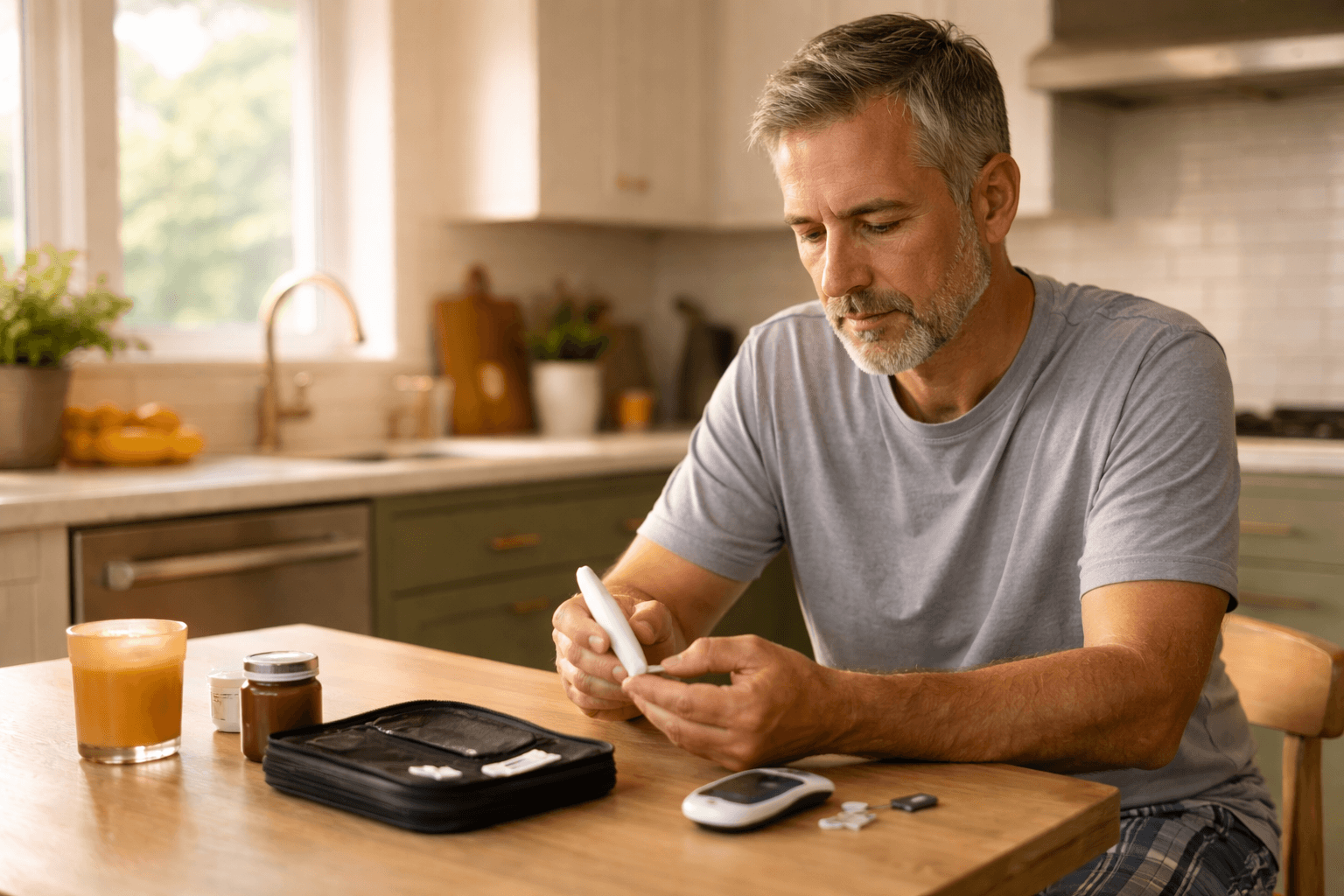
You don’t need a doctor’s appointment to monitor your fasting blood sugar. A basic glucometer — available at most pharmacies for under $20 — gives you accurate fasting readings in seconds.
How to test:
Step 1: Don’t eat or drink anything except water for at least 8 hours before testing.
Step 2: Test first thing in the morning, before getting up or doing anything active. Keep your glucometer by your bedside so you can test shortly after waking.
Step 3: Wash your hands with warm water and dry them thoroughly.
Step 4: Prick the side of your fingertip (less painful than the center).
Step 5: Apply a small drop of blood to the test strip.
Step 6: Record your result and the date.
Testing 3 to 4 mornings in a row gives you a more reliable baseline than a single reading. One elevated morning doesn’t mean there’s a problem — but consistently elevated fasting blood sugar over several days is worth discussing with your doctor.
What about Continuous Glucose Monitors (CGMs)? CGMs track your blood sugar 24 hours a day, including while you sleep. They show you exactly what happens to your blood sugar overnight — whether you experience the Dawn Phenomenon, how your previous night’s dinner affected morning glucose, and how your fasting blood sugar trends over time. They’re more expensive than glucometers but provide far more detailed information.
Frequently Asked Questions (FAQ)
What is a normal blood sugar when fasting?
According to the ADA, a normal fasting blood sugar is under 100 mg/dL. Optimal metabolic health is associated with fasting glucose between 70 and 85 mg/dL. Readings between 100 and 125 mg/dL indicate prediabetes, and 126 mg/dL or above on two separate tests indicates type 2 diabetes.
What causes high blood sugar when fasting?
The most common causes of high fasting blood sugar include insulin resistance, the Dawn Phenomenon, poor sleep, chronic stress, and high-carbohydrate evening meals. Addressing these factors through lifestyle changes can significantly reduce fasting glucose levels.
Can I lower my blood sugar when fasting without medication?
Yes — for many people, lifestyle changes alone can meaningfully lower fasting blood sugar. Walking after dinner, strength training, improving sleep quality, managing stress, and optimizing your evening diet are all evidence-backed strategies for reducing fasting glucose naturally.
How quickly can fasting blood sugar improve?
Many people see measurable improvements in blood sugar when fasting within 2 to 4 weeks of consistent lifestyle changes. Fasting glucose is one of the most responsive metabolic markers to diet and exercise interventions.
Should I test my blood sugar when fasting every day?
Daily testing isn’t necessary for everyone, but testing 3 to 4 mornings in a row periodically — especially after making dietary or lifestyle changes — gives you useful feedback on how your body is responding. If you have prediabetes or are concerned about your metabolic health, discussing a monitoring plan with your doctor is a good idea.
The Bottom Line
Your blood sugar when fasting is one of the most powerful early warning signals your body sends. It reflects years of metabolic history — and it responds quickly to the right changes.
If your fasting glucose is in the optimal range, the strategies in this guide will help you keep it there. If it’s higher than it should be, the evidence is clear: diet, movement, sleep, and stress management can bring it back down — often faster than most people expect.
Blood sugar when fasting isn’t just a number on a lab report. It’s a direct window into how well your metabolism is working — and a powerful tool for taking control of your long-term health.
Have you checked your fasting blood sugar recently? Drop a comment below and let us know where your numbers are — and if this guide helped you understand them better
“Fasting blood sugar was the number that changed everything for me when I started researching metabolic health. It’s the one measurement that cuts through the noise and tells you, clearly and honestly, how your body is managing glucose at baseline. If you haven’t checked yours recently, I’d encourage you to do it. Knowledge is power — and this is one number worth knowing.”
— Sarah Mitchell
Sources & Scientific References
- American Diabetes Association (ADA): Standards of Care in Diabetes
- Mayo Clinic: Blood sugar testing — understanding the numbers
- National Institute of Diabetes and Digestive and Kidney Diseases (NIDDK): Diabetes Tests & Diagnosis
- Cleveland Clinic: Fasting Blood Sugar Test
Medical Disclaimer: The information provided on BioHealth Source is for educational and informational purposes only and does not constitute medical advice. Always consult with a qualified healthcare professional before making significant changes to your diet, exercise routine, or if you have questions regarding a medical condition.
Affiliate Disclosure: This post may contain affiliate links. If you click on one of these links and make a purchase, we may receive a small commission at no extra cost to you. This helps support our research and content creation. We only recommend products we truly believe in.