

Hi, I'm Sarah Mitchell. I've spent years researching metabolic health to help women reclaim their energy and balance their hormones naturally. Welcome to BioHealth Source.
It’s 3:00 PM. You’re staring at your laptop, but your brain feels like it’s packed with cotton. You’re hit with that familiar, overwhelming wave of exhaustion—the dreaded afternoon slump. Suddenly, you’re rummaging through the pantry for anything sweet, salty, or caffeinated just to keep your eyes open.
These symptoms are more common than most people realize — and the science behind them is simpler than you might think. In this guide, you’ll discover exactly how to lower blood sugar naturally — which daily habits have the biggest impact, and why small, consistent changes produce results that extreme diets never could.
Welcome to metabolic health basics. For decades, we were told to just count calories if we wanted to lose a few extra lbs or feel better. But the biohacking community and modern science have revealed a much more powerful lever: blood sugar management. Here is your expert-friend guide to stopping the crashes, healing your metabolism, and reclaiming your all-day energy.
What Is Blood Sugar and Why It Matters
To understand your metabolism, you need to understand glucose. Glucose is simply the sugar that your body creates when it breaks down the carbohydrates you eat. It’s your body’s primary source of energy. Think of your body as a car, and your cells as the gas tank.
When you eat a balanced meal, a steady stream of fuel enters the tank, and your car runs beautifully. But what happens if you guzzle down a massive iced caramel latte on an empty stomach? You’re pumping gas into the tank way faster than it can hold it. The tank overflows.
When your bloodstream is flooded with too much glucose, your pancreas releases a hormone called insulin. Insulin is like the attendant frantically shoving that extra, overflowing fuel into your “trunk” (your fat cells) to keep your bloodstream safe.
If this happens every day, your cells eventually get tired of insulin yelling at them and stop listening. This is poor insulin sensitivity (or insulin resistance). Experts at the Harvard T.H. Chan School of Public Health note that diets high in rapidly digested carbs place immense stress on this exact system, driving weight gain, chronic inflammation, and metabolic disease. Learning how to lower blood sugar naturally starts with understanding this basic glucose–insulin relationship.
The Blood Sugar Rollercoaster: Why Spikes and Crashes Happen
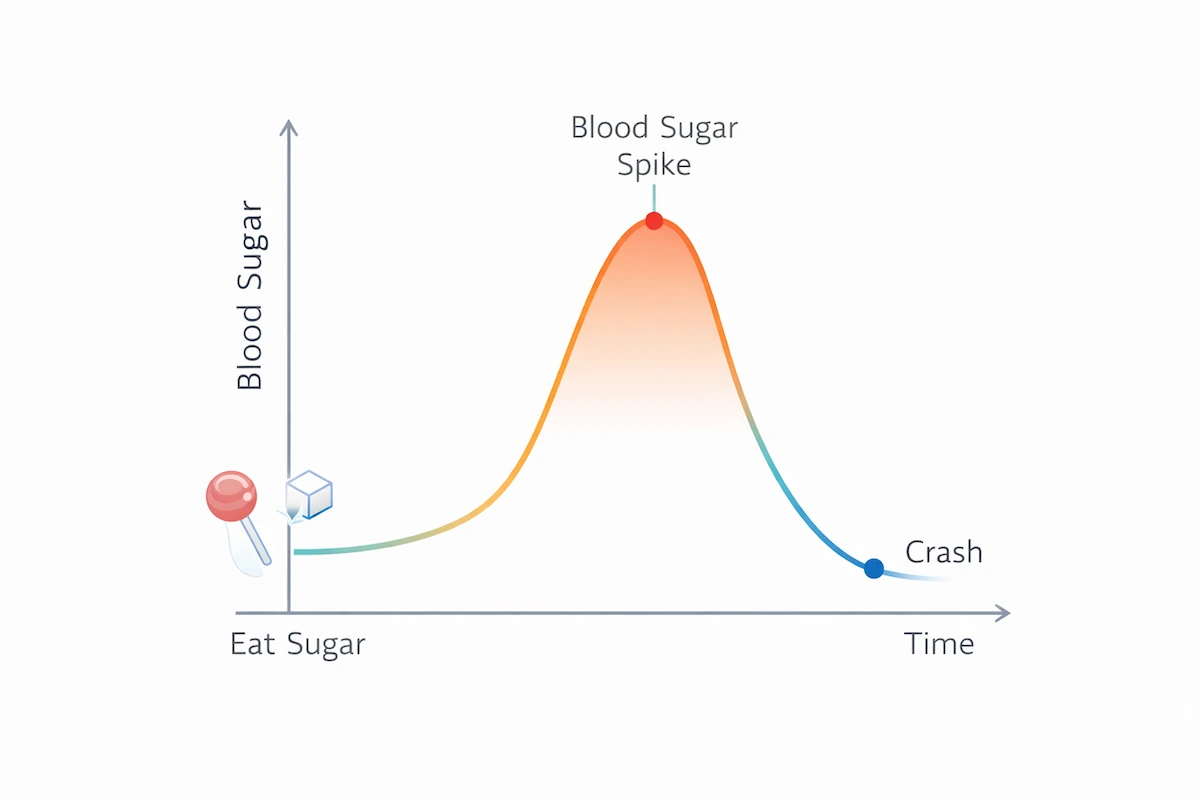
When you eat “naked carbs” (like a plain bagel or a handful of pretzels), you get a massive, rapid surge in blood sugar. In the medical world, this is called postprandial glycemia. We’re just going to call it the sugar spike after you eat.
Here is the golden rule of metabolic health: A big spike always guarantees a big crash.
When your blood sugar spikes, insulin rushes in and pulls all that sugar out of your blood too quickly. Your glucose levels plummet below baseline. This steep drop triggers a massive alarm in your brain. The result?
- Intense brain fog
- Irritability (hanger!)
- Uncontrollable cravings for more carbs
You are trapped on the glucose rollercoaster. The American Diabetes Association (ADA) highlights that managing these post-meal spikes—ideally keeping your blood sugar under 140 mg/dL after meals—is crucial for long-term health and energy, even if you don’t have diabetes.
If you think you might already have insulin resistance, read our guide on the 7 early signs of insulin resistance.
And if you’re a woman experiencing these symptoms, our guide on insulin resistance symptoms in females goes deeper into how this condition affects women specifically
How to Lower Blood Sugar Naturally: 4 Proven Strategies
Many people assume medication is the only solution, but understanding how to lower blood sugar naturally can dramatically improve glucose stability through simple daily habits.
You don’t need to give up your favorite foods to master your blood sugar. You just need to eat them smarter. For a complete breakdown of what to put on your plate, check out our guide on the best foods for insulin resistance. Here are four biohacker-approved ways to flatten your glucose curve
1. Food Sequencing (The Fiber-First Rule)
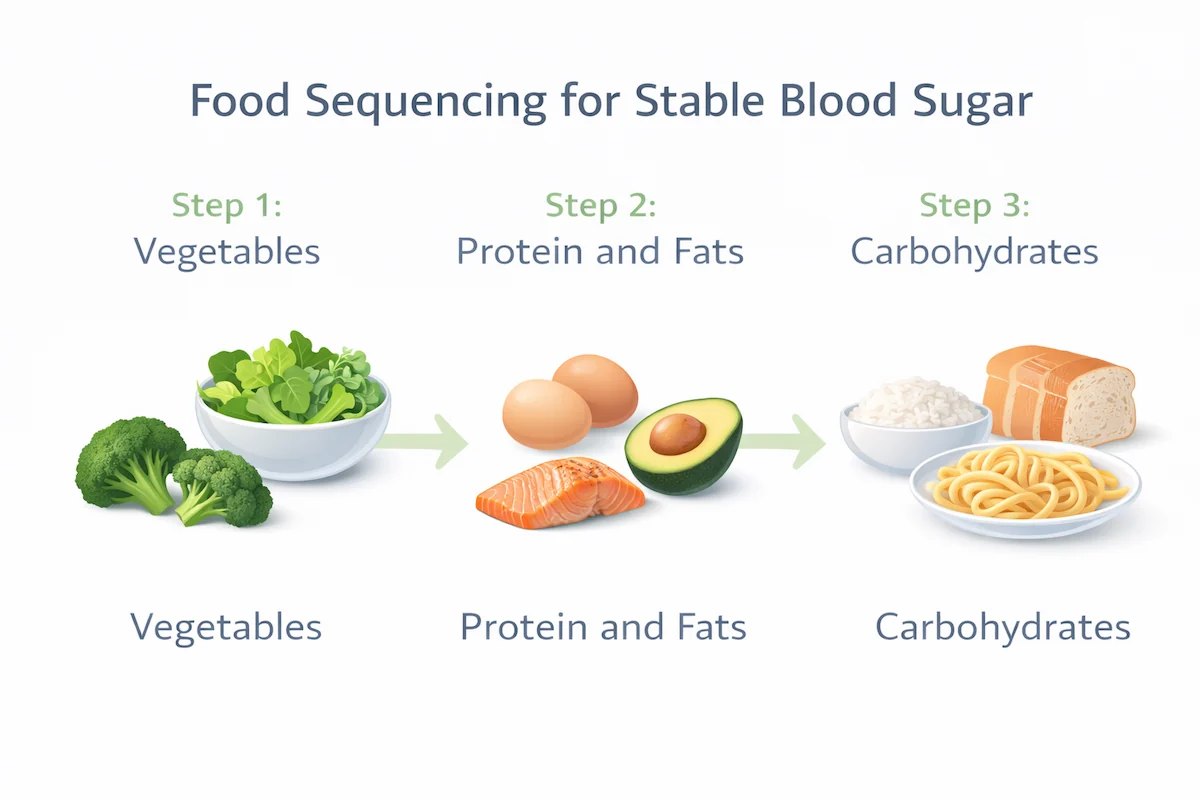
The order in which you eat your food matters just as much as what you eat. Always follow the fiber-first rule: eat your vegetables first, then your proteins and fats, and save your starches and sugars for last.
For a visual guide on how to balance these proportions, see the Harvard Healthy Eating Plate.
- Why it works: The fiber from the veggies coats your stomach and upper intestines, creating a viscous mesh. When the carbs finally arrive, they are absorbed much slower.
This simple strategy is one of the easiest ways to lower blood sugar naturally without giving up your favorite meals.
2. The “Vinegar Trick”
About 10 to 20 minutes before a carb-heavy meal, drink a tall glass of water mixed with 1 tablespoon of Apple Cider Vinegar (ACV).
- Why it works: The acetic acid in vinegar temporarily slows down the enzyme that breaks down starches into sugar, and it encourages your muscles to soak up glucose faster. It’s like putting a speed bump in front of a sugar spike!
While not a miracle solution, this can support efforts to lower blood sugar naturally when combined with balanced meals.
3. The 10-Minute Post-Meal Walk

Don’t sit on the couch after dinner! Get up and move for just 10 minutes. Even if it’s 40 degrees Fahrenheit outside, a quick walk around the block or doing some chores around the house works wonders.
- Why it works: When your muscles contract, they don’t need insulin to absorb glucose. They pull the sugar straight out of your bloodstream to use for immediate energy, naturally flattening the curve.
Even short movement sessions can significantly lower blood sugar naturally after eating. Want to know what your glucose should look like during that window? See our guide on blood sugar after eating.
Want to learn more about why this works? Read our full guide on walking after meals benefits.
4. Muscle as a “Glucose Sponge”
Building lean muscle mass through resistance training is the ultimate long-term hack for metabolic health.
- Why it works: Think of your muscles as a sponge for sugar. The bigger the sponge, the more water (glucose) it can hold. Recent studies published in Nature Metabolism confirm that skeletal muscle is our body’s largest “sink” for glucose disposal. Lifting weights physically expands your fuel tank!
Building muscle is one of the most powerful long-term strategies to lower blood sugar naturally and improve insulin sensitivity.
If you want to go deeper on this topic, we put together a complete guide on the best exercises to reduce blood sugar levels — including a simple 7-day plan you can start this week.
Strategies like food sequencing show that how to lower blood sugar naturally often depends more on timing and combinations of foods than strict dieting.
High-Spike vs. Blood Sugar-Friendly Meals
Because of the hidden sugars in US snacks and standard meals, you might be spiking without realizing it. Here is how to easily swap a traditional meal for a glucose-smart version:
| Meal Time | Traditional High-Spike Meal (The Rollercoaster) | The Glucose-Smart Version (The Flat Curve) |
|---|---|---|
| Breakfast | Bowl of oat cereal with skim milk and a glass of orange juice. | 3 scrambled eggs, half an avocado, and a side of berries (Choose whole fruit over juice). |
| Lunch | Turkey sandwich on white bread with a side of potato chips. | A large mixed greens salad (eaten first!), followed by the turkey sandwich on sourdough. |
| Snack | A “healthy” US granola bar (often hiding 15g+ of added sugar). | A handful of almonds and a piece of dark chocolate (70%+ cacao). |
| Dinner | A large plate of pasta with marinara sauce. | A side of roasted broccoli (eaten first), a chicken breast, and a smaller portion of pasta. |
FAQ: How to Lower Blood Sugar Naturally
1. Is fruit sugar bad for me?
No! Whole fruit contains fructose, but it is naturally packaged with fiber and water, which slows down the sugar absorption. However, fruit juice has the fiber stripped away and will spike you almost exactly like a soda.
2. Does black coffee spike my blood sugar?
For most people, black coffee does not cause glucose spikes. However, caffeine can temporarily raise a stress hormone called cortisol, which might cause a tiny bump in glucose for highly sensitive individuals. Just avoid drinking it on an empty stomach if you feel jittery.
3. What is a normal blood sugar range?
According to the ADA, a normal fasting blood sugar (first thing in the morning) is under 100 mg/dL. For a complete breakdown of what these numbers mean, read our guide on blood sugar when fasting. After eating, a metabolically healthy goal is to keep your glucose under 140 mg/dL and have it return to baseline within two hours. For a complete breakdown of post-meal numbers, read our guide on blood sugar after eating.
4. Do I need a Continuous Glucose Monitor (CGM)?
You don’t need one, but they are an incredible biohacking tool. A CGM gives you real-time data on how your body uniquely reacts to specific foods, stress, and sleep. It takes the guesswork out of blood sugar management.
5. How long does it take to improve insulin sensitivity?
The beauty of your metabolism is that it is highly adaptable. By implementing the fiber-first rule, walking after meals, and cutting out liquid sugars, you can start seeing improved energy and fewer cravings in a matter of days.
Conclusion
Learning how to lower blood sugar naturally doesn’t require extreme diets or complicated routines. The strategies in this guide — food sequencing, the vinegar trick, post-meal walking, and building muscle — are four of the most evidence-backed ways to lower blood sugar naturally and keep it stable long term.. Small changes — like improving meal order, choosing whole foods, and supporting your metabolism with natural strategies — can make a powerful difference over time.
By applying these simple habits consistently, you can stabilize your glucose levels, maintain steady energy throughout the day, and support long-term metabolic health.
“Lowering your blood sugar naturally isn’t about perfection — it’s about consistency. Small changes, done daily, create real metabolic shifts. I’ve seen it happen in the research, and I’ve seen it happen in real life. Start with one habit this week, and build from there. Your body is more resilient than you think.”
— Sarah Mitchell
Sources & Scientific References
American Diabetes Association (ADA): Standards of Care in Diabetes — The official clinical guidelines for blood sugar testing, glycemic targets, and metabolic control.
Harvard T.H. Chan School of Public Health: The Nutrition Source — A comprehensive breakdown of how different types of carbohydrates impact blood glucose and insulin response.
Nature Metabolism: Skeletal Muscle Glucose Uptake — Scientific reviews detailing how muscle tissue acts as the primary site for glucose disposal and its role in metabolic health.
Sports Medicine: The Influence of Postprandial Walking — Evidence-based meta-analysis confirming the benefits of short walks for stabilizing post-meal glucose.
National Library of Medicine (NIH): Vinegar Consumption and Postprandial Glycaemia — Clinical research and meta-analysis demonstrating how vinegar influences enzyme activity and glucose absorption.
Medical Disclaimer: The information provided on BioHealth Source is for educational and informational purposes only and does not constitute medical advice. Always consult with a qualified healthcare professional before making significant changes to your diet, exercise routine, or if you have questions regarding a medical condition.
Affiliate Disclosure: This post may contain affiliate links. If you click on one of these links and make a purchase, we may receive a small commission at no extra cost to you. This helps support our research and content creation. We only recommend products we truly believe in.