


Hi, I'm Sarah Mitchell. I've spent years researching metabolic health to help women reclaim their energy and balance their hormones naturally. Welcome to BioHealth Source.
You’ve just learned that your blood sugar numbers are in the prediabetes range. Or maybe you’ve recognized the warning signs and you’re ready to act before things go further.
Either way, you’re in the right place — because what you eat is the single most powerful lever you have for reversing prediabetes. Not medication. Not extreme restriction. Not counting every calorie.
The right prediabetes diet isn’t about eating less. It’s about eating smarter — composing your plate in a way that keeps insulin low, glucose stable, and your cells responding efficiently.
In this guide, we’ll break down the 5 golden rules of a prediabetes diet, give you a complete 7-day meal plan you can start this week, and show you exactly which foods to embrace and which to avoid — all backed by evidence, and all designed for real life.
If you haven’t yet read our guide on prediabetes symptoms, start there first — understanding what’s happening in your body makes the dietary changes much easier to sustain.
What Is a Prediabetes Diet — And How Does It Work?
A prediabetes diet is not a fad diet. It’s not a list of foods you can never eat again. It’s a way of eating that works with your body’s insulin system — keeping blood sugar rises slow and steady, reducing the burden on your pancreas, and giving your cells the chance to recover their insulin sensitivity.
The core mechanism is simple: every time you eat, glucose enters your bloodstream. The speed and height of that glucose rise depends on what you ate, how much you ate, and in what order you ate it. A prediabetes diet is designed to keep that rise as flat and controlled as possible — meal after meal, day after day.
Over time, this consistent approach reduces fasting blood sugar, improves post-meal glucose responses, lowers insulin levels, and — in many cases — brings blood sugar back into the normal range entirely.
The foods that drive prediabetes are well-established: rapidly digested carbohydrates, added sugars, and liquid calories. The foods that reverse it are equally clear: fiber, protein, healthy fats, and low-glycemic whole foods.
For a deeper look at exactly which foods support insulin sensitivity, our guide on the best foods for insulin resistance covers every food group in detail.
The 5 Golden Rules of a Prediabetes Diet
Rule 1: Eat Fiber First at Every Meal
This is the single most impactful change you can make to your prediabetes diet — and it costs nothing.
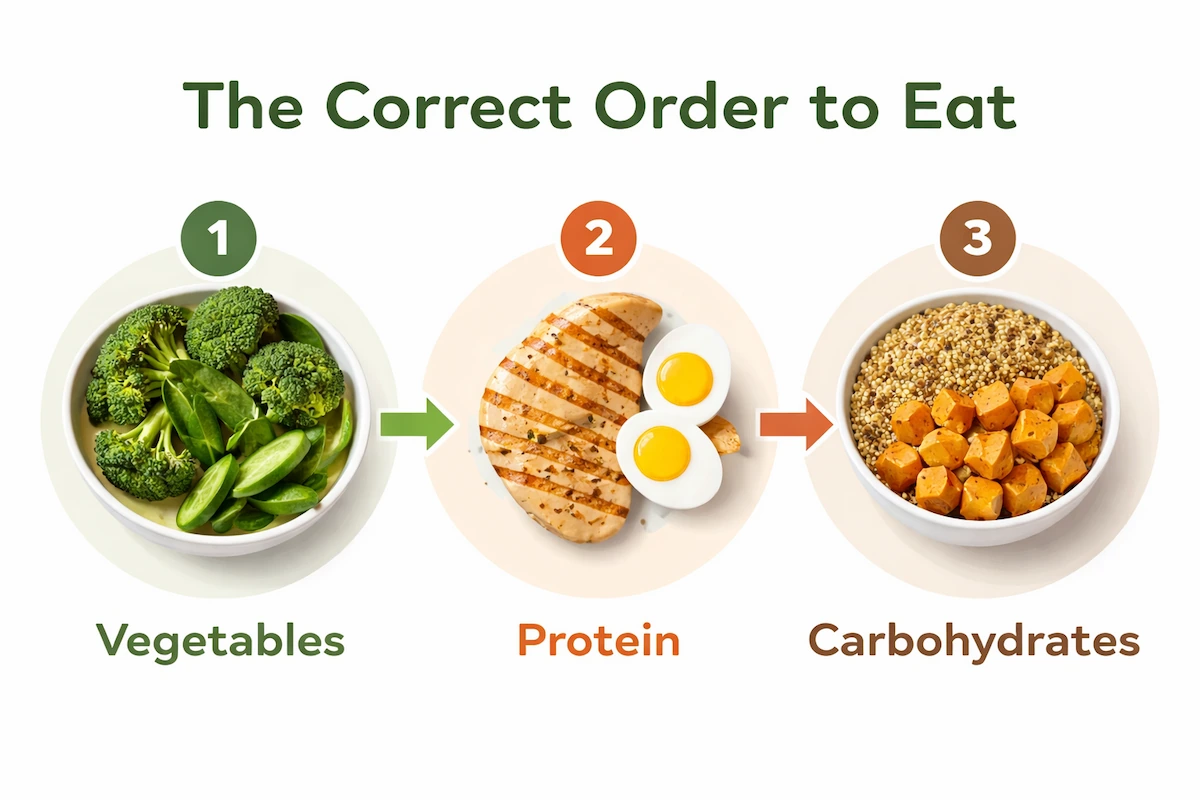
The order in which you eat your food dramatically affects how high your blood sugar rises after a meal. Research shows that eating non-starchy vegetables first, followed by protein and healthy fats, then carbohydrates last, can reduce post-meal blood sugar spikes by up to 73% compared to eating carbohydrates first.
Here’s why it works: the fiber from vegetables forms a viscous mesh in your digestive tract, slowing the absorption of glucose from the carbohydrates that follow. By the time those carbohydrates are digested, your insulin response has had time to prepare — and the glucose enters your bloodstream slowly and steadily instead of all at once.
The practical rule: always start your lunch and dinner with a small salad or a serving of non-starchy vegetables — broccoli, spinach, kale, cucumber, zucchini, asparagus — before anything else on your plate.
Rule 2: Prioritize Protein at Every Meal
Protein is one of the most powerful tools in a prediabetes diet. It slows gastric emptying — the rate at which food leaves your stomach — reducing the speed of glucose absorption. It also promotes satiety, reducing the likelihood of overeating carbohydrates later.
Aim for at least 20 to 30 grams of protein per meal. The best sources for a prediabetes diet are eggs, chicken, turkey, fish, seafood, Greek yogurt, cottage cheese, and legumes. For a complete breakdown of each protein source and how they affect blood sugar, read our guide on the best protein sources for blood sugar.
Protein also has a very low glycemic impact on its own — meaning it doesn’t cause blood sugar spikes. Building your meals around a protein anchor, then adding vegetables and a small portion of low-glycemic carbohydrates, is the structural foundation of an effective prediabetes diet.
Rule 3: Choose Low-Glycemic Carbohydrates
Not all carbohydrates affect blood sugar equally. The glycemic index (GI) measures how quickly a carbohydrate raises blood sugar — and choosing low-GI carbohydrates is one of the most evidence-backed strategies in a prediabetes diet.
High-glycemic foods to minimize: white bread, white rice, regular pasta, sugary cereals, instant oats, most crackers, and anything made with refined flour or added sugar.
Low-glycemic alternatives to embrace: sourdough bread, sweet potatoes, legumes (lentils, chickpeas, black beans), steel-cut oats, quinoa, barley, and most whole fruits. For a complete breakdown of the best low-glycemic carbohydrates and the temperature trick, read our dedicated guide.
→ Link: https://biohealthsource.com/best-low-glycemic-carbohydrates/
The difference in blood sugar response between a bowl of white rice and a bowl of lentils is dramatic — even when the calorie count is similar. Swapping high-glycemic for low-glycemic carbohydrates is one of the fastest ways to flatten your glucose curve without giving up carbohydrates entirely.
Rule 4: Eliminate Liquid Sugar Completely
If there is one non-negotiable in a prediabetes diet, it’s this: eliminate all liquid calories that contain sugar.
Sugary drinks — sodas, fruit juices, energy drinks, sweetened coffees, flavored waters — deliver glucose to your bloodstream faster than almost any other food. There is no fiber, no protein, no fat to slow the absorption. The result is an immediate, steep blood sugar spike followed by an equally steep crash.
Research consistently shows that sugary drink consumption is one of the strongest dietary predictors of prediabetes progression to type 2 diabetes.
Replace all sugary drinks with water, unsweetened sparkling water, black coffee, or unsweetened tea. These are the only beverages that support a prediabetes diet. If you want flavor, add a slice of lemon, cucumber, or fresh mint to your water.
Rule 5: Control Portions of Carbohydrates — Without Eliminating Them
A prediabetes diet does not require zero carbohydrates. Extreme carbohydrate restriction is difficult to sustain and unnecessary for most people with prediabetes.
What matters is portion control. The glucose load entering your bloodstream is directly proportional to the amount of carbohydrate you consume at one sitting. A small portion of pasta at the end of a fiber-and-protein-rich meal produces a very different blood sugar response than a large bowl of pasta eaten alone.
A practical guideline: limit starchy carbohydrates to no more than a quarter of your plate at any meal — and always eat them last, after your fiber and protein.
For a complete breakdown of how post-meal blood sugar responds to different portion sizes, read our guide on blood sugar after eating.
Foods to Eat and Foods to Avoid on a Prediabetes Diet
| Category | Eat Freely | Eat in Moderation | Avoid |
|---|---|---|---|
| Vegetables | Broccoli, spinach, kale, zucchini, asparagus, cucumber | Sweet potato, carrots, beets | White potato (large portions) |
| Protein | Eggs, chicken, turkey, fish, seafood, Greek yogurt, cottage cheese | Legumes, lean red meat | Processed meats, deli meats with additives |
| Fats | Avocado, olive oil, nuts, seeds, fatty fish | Cheese, full-fat dairy | Trans fats, vegetable oils (corn, soybean) |
| Carbohydrates | Lentils, chickpeas, quinoa, steel-cut oats | Sourdough bread, sweet potato, brown rice, berries | White bread, white rice, pasta, sugary cereals, pastries |
| Drinks | Water, black coffee, unsweetened tea | Unsweetened almond milk | Sodas, fruit juice, energy drinks, sweetened coffees |
| Snacks | Raw almonds, walnuts, celery + almond butter, cucumber slices | Dark chocolate (85%+), blueberries | Granola bars, crackers, flavored yogurt, chips |
The 7-Day Prediabetes Reversal Meal Plan
This 7-day meal plan puts the 5 golden rules into practice. Every lunch and dinner begins with a small green salad or serving of cruciferous vegetables — the fiber-first rule in action. For a more detailed version with a complete grocery list and budget-friendly swaps, read our dedicated 7-day prediabetes meal plan guide.
The goal of this plan is not restriction. It’s abundance — of flavor, of nutrition, and of metabolic benefit. You’ll notice that every meal is built around a protein anchor, accompanied by generous vegetables, and finished with a small, controlled portion of low-glycemic carbohydrates where included.
Remember: throughout the week, accompany every meal with water, unsweetened tea, or black coffee. No sugary drinks, no fruit juice.
Monday: The Foundation
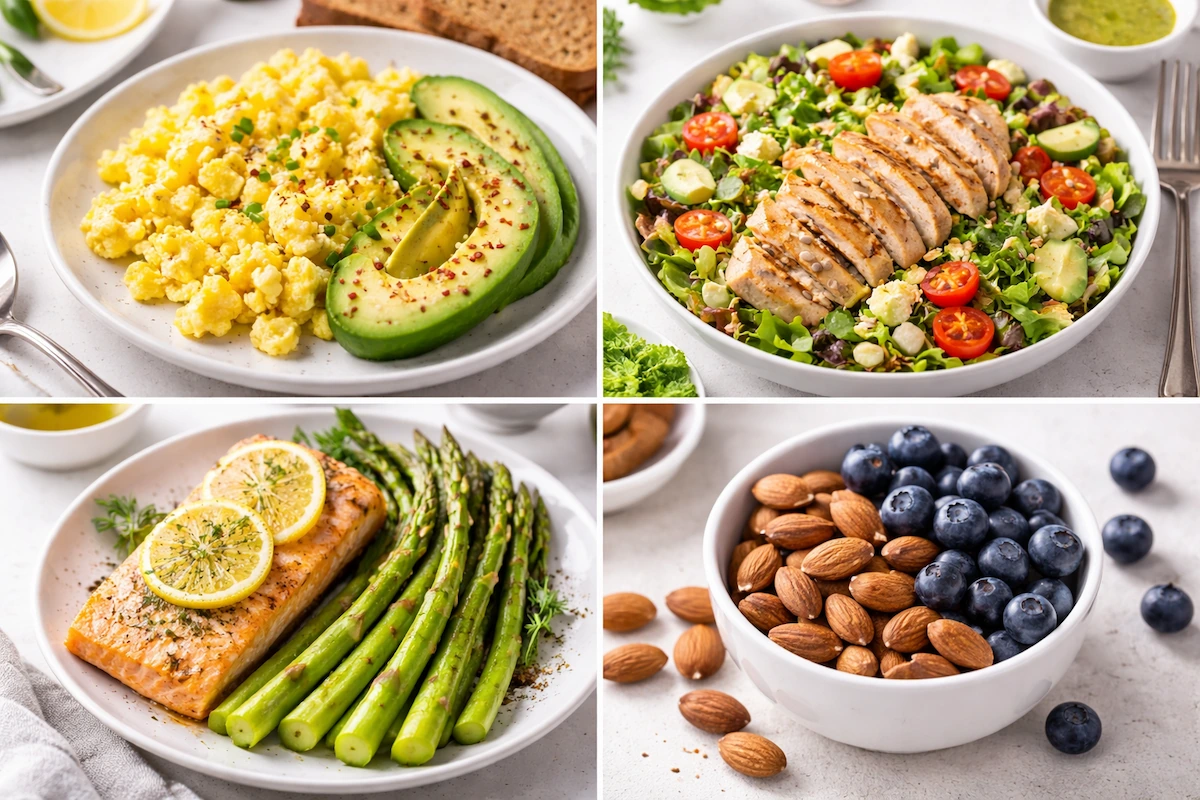
Breakfast: Scrambled eggs with spinach and avocado
Lunch: Small green salad first → Grilled chicken breast with roasted broccoli and a small side of quinoa
Dinner: Small green salad first → Baked salmon with asparagus and sautéed zucchini
Snack: A handful of raw almonds
Tuesday: Sustained Energy
Breakfast: Greek yogurt (unsweetened) with chia seeds and a few raspberries
Lunch: Small green salad first → Turkey and avocado salad with olive oil dressing
Dinner: Small green salad first → Ground beef sautéed with bell peppers and onions, served over cauliflower rice
Snack: One hard-boiled egg
Wednesday: Plant-Forward
Breakfast: Omelet with mushrooms and feta cheese
Lunch: Small green salad first → Tuna salad (made with olive oil or avocado mayo) over a large bed of greens
Dinner: Small green salad first → Grilled shrimp skewers with sautéed kale and half a sweet potato
Snack: Celery sticks with almond butter
Thursday: Metabolic Boost
Breakfast: Chia seed pudding made with unsweetened almond milk
Lunch: Small green salad first → Leftover ground beef and peppers from Tuesday (easy meal prep!)
Dinner: Small green salad first → Chicken thighs with roasted Brussels sprouts and a side salad
Snack: A small piece of dark chocolate (at least 85% cocoa)
Friday: Healthy Fats Focus
Breakfast: Avocado toast on a small slice of sprouted grain bread with a poached egg
Lunch: Small green salad first → Mediterranean salad with chickpeas, cucumbers, tomatoes, and olives
Dinner: Small green salad first → Baked cod with lemon, garlic, and a generous serving of green beans
Snack: Walnuts
Saturday: Flavor & Variety
Breakfast: Spinach and goat cheese frittata
Lunch: Small green salad first → Grilled steak salad with arugula, radish, and balsamic vinaigrette
Dinner: Small green salad first → Zucchini noodles (zoodles) with pesto and grilled chicken
Snack: Half a cup of blueberries
Sunday: The Reset
Breakfast: Smoked salmon and cream cheese on cucumber slices
Lunch: Small green salad first → Chicken salad with walnuts and celery (no bread)
Dinner: Small green salad first → Slow-cooked pot roast with carrots and a large side of steamed spinach
Snack: Pumpkin seeds
💡 The Escape Plan: What to Do When You Go Off Track
Nobody follows any meal plan perfectly — and that’s completely fine. If you have a meal that’s higher in carbohydrates than planned, there’s a simple and highly effective strategy to minimize the blood sugar impact: go for a 10-minute walk within 30 minutes of finishing the meal.
As we covered in our guide on walking after meals benefits, a short post-meal walk activates your muscles to absorb glucose directly from your bloodstream — without needing insulin — significantly flattening the post-meal glucose curve in real time. It’s the best “damage control” strategy in metabolic health, and it works every single time.

Supplements That Support a Prediabetes Diet
A well-structured prediabetes diet is the foundation — but certain evidence-backed supplements can meaningfully accelerate your results:
Berberine
Activates AMPK — the body’s metabolic master switch — improving insulin sensitivity and reducing both fasting and post-meal blood sugar. Multiple clinical trials have shown results comparable to metformin in people with prediabetes. Read our complete guide on berberine for insulin resistance.
Magnesium
Plays a critical role in insulin signaling. Deficiency — which is extremely common — is strongly linked to impaired glucose metabolism and insulin resistance. Supplementing with magnesium glycinate or magnesium malate supports the dietary changes in your prediabetes diet.
Apple Cider Vinegar (ACV)
Taken 10 to 20 minutes before a carbohydrate-heavy meal slows the enzyme that breaks down starches into glucose, producing a measurably lower post-meal blood sugar response.
Cinnamon
Has modest but consistent evidence for improving insulin sensitivity and reducing post-meal glucose spikes when consumed regularly — and it can be added directly to foods like Greek yogurt, oatmeal, or coffee.
How Long Does a Prediabetes Diet Take to Work?
This is the question everyone asks — and the answer is more encouraging than most people expect.
Many people see measurable improvements in fasting blood sugar within 2 to 4 weeks of consistently following a prediabetes diet. Post-meal glucose responses often improve even faster — sometimes within days of eliminating liquid sugar and adopting the fiber-first approach.
The landmark Diabetes Prevention Program study found that lifestyle interventions — primarily diet and exercise — reduced the progression from prediabetes to type 2 diabetes by 58%. And these improvements came from manageable, sustainable changes — not extreme restriction.
For the clearest picture of your progress, test your fasting blood sugar regularly. Our guide on blood sugar when fasting explains exactly what your numbers mean and how to track them at home.
Frequently Asked Questions (FAQ)
What is the best diet for prediabetes?
The most evidence-backed prediabetes diet emphasizes non-starchy vegetables, lean protein, healthy fats, and low-glycemic carbohydrates — while eliminating added sugars and liquid calories. The fiber-first approach at every meal is the single most impactful structural change you can make.
Can I eat fruit on a prediabetes diet?
Yes — whole fruit is generally well-tolerated on a prediabetes diet because the fiber in whole fruit slows glucose absorption. The best choices are low-glycemic fruits: berries, cherries, apples, and pears. Avoid fruit juice entirely — the fiber is removed, and it spikes blood sugar like a sugary drink.
Is bread allowed on a prediabetes diet?
Some breads are acceptable in moderation. Sourdough bread and sprouted grain bread have a lower glycemic index than white bread and produce a much more controlled blood sugar response. Portion size matters — limit to one or two slices, eaten after vegetables and protein.
How many carbs should I eat per day with prediabetes?
There is no single universal number, but most evidence supports limiting net carbohydrates to 100 to 150 grams per day for people with prediabetes — focusing on high-fiber, low-glycemic sources. The quality of carbohydrates matters more than the exact number.
Can a prediabetes diet reverse prediabetes completely?
Yes — for many people, a consistent prediabetes diet combined with regular movement can bring blood sugar back into the normal range entirely. The Diabetes Prevention Program study showed that lifestyle changes reduced progression to type 2 diabetes by 58%, and many participants reversed their prediabetes completely.
Do I need to count calories on a prediabetes diet?
No. A prediabetes diet is not about eating less — it’s about eating smarter. When you build meals around fiber, protein, and healthy fats, satiety improves naturally and blood sugar stays stable without the need for calorie counting.
The Bottom Line
A prediabetes diet is not a punishment. It’s one of the most empowering things you can do for your long-term health — because the evidence is clear that it works, and it works faster than most people expect.
Start with the 5 golden rules. Try the 7-day meal plan. Remember the fiber-first approach at every meal. Eliminate liquid sugar this week.
Your blood sugar numbers are not fixed. They respond — quickly and measurably — to the right food choices. And every meal is a new opportunity to move them in the right direction.
For a complete picture of how your body responds to food, combine this guide with regular blood sugar testing. Our guide on blood sugar after eating shows you exactly what to measure and what your numbers should look like.
“A prediabetes diagnosis is not a life sentence — it’s an invitation. An invitation to understand how your body works, to make smarter choices at every meal, and to take back control before things get harder. The 5 rules in this guide aren’t deprivation — they’re liberation. When your blood sugar is stable, your energy is stable. Your cravings disappear. Your brain works better. That’s not a diet. That’s a transformation.”
— Sarah Mitchell
Want to take this plan with you? Save the 7-Day Prediabetes Meal Plan for easy reference.
Download the Printable 7-Day PlanSources & Scientific References
Johns Hopkins Medicine: Prediabetes Diet — Guidelines on food choices and the “Plate Method” for reversing prediabetes.
Harvard T.H. Chan School of Public Health: Carbohydrates and Blood Sugar — Explains the glycemic index and the impact of complex carbohydrates.
Mayo Clinic: Diabetes Diet: Create Your Healthy-Eating Plan — An authoritative guide on meal planning, carbohydrate counting, and choosing nutrient-dense foods to prevent blood sugar spikes.
Cleveland Clinic: Best Foods for Prediabetes — Evidence-based recommendations for high-fiber and non-starchy vegetables.
Diabetes Prevention Program (DPP): Reduction in the Incidence of Type 2 Diabetes — The landmark study proving a 58% reduction in risk through lifestyle changes.
Centers for Disease Control and Prevention (CDC): National Diabetes Statistics Report — Current data on prediabetes prevalence and awareness.
American Diabetes Association (ADA): Eating Healthy with Diabetes — Official nutritional strategies for building a balanced plate and understanding the impact of food on blood sugar.
Journal of Clinical Biochemistry and Nutrition: Food Order and Postprandial Glucose — Validates the “Fiber-First” approach to eating.
Sports Medicine: The Influence of Postprandial Walking — Meta-analysis confirming the benefits of short walks after meals.
Diabetes Care (Shukla et al.): Food Order Has a Significant Impact on Postprandial Glucose and Insulin Levels — A clinical pilot study demonstrating that eating vegetables and protein before carbohydrates can reduce post-meal glucose spikes by up to 73%.
Medical Disclaimer: The information provided on BioHealth Source is for educational and informational purposes only and does not constitute medical advice. Always consult with a qualified healthcare professional before making significant changes to your diet, exercise routine, or if you have questions regarding a medical condition.
Affiliate Disclosure: This post may contain affiliate links. If you click on one of these links and make a purchase, we may receive a small commission at no extra cost to you. This helps support our research and content creation. We only recommend products we truly believe in.