


Hi, I'm Sarah Mitchell. I've spent years researching metabolic health to help women reclaim their energy and balance their hormones naturally. Welcome to BioHealth Source.
You’ve been doing “everything right.” You eat reasonably well, you’re not dramatically overweight, and yet something feels off. You’re exhausted after meals, you can’t lose those last stubborn pounds, and your brain seems to shut down every afternoon.
Sound familiar? You might be experiencing the classic signs of insulin resistance — and the frustrating part is that most people have it for years before getting a diagnosis.
The good news? Your body has been sending you signals all along. You just need to know what to look for.
In this guide, we’ll break down the 7 early warning signs of insulin resistance, what’s happening inside your body, and — most importantly — the science-backed steps you can take to reverse it naturally.
What Is Insulin Resistance? (A Quick Recap)
Before we dive into the signs, let’s make sure we’re on the same page.
Insulin is a hormone produced by your pancreas. Its job is to act like a “key” — unlocking your cells so glucose (sugar from food) can enter and be used for energy.
Insulin resistance happens when your cells stop responding to that key. Your pancreas has to produce more and more insulin to do the same job. Over time, this creates a dangerous cycle:
- 🔺 High blood sugar levels
- 🔺High insulin levels
- 🔺 Increased fat storage
- 🔺 Chronic inflammation
- 🔺 Higher risk of type 2 diabetes
According to the CDC, more than 1 in 3 American adults has prediabetes — and 80% of them don’t even know it. Insulin resistance is the driving force behind this silent epidemic.
Experts at the Harvard T.H. Chan School of Public Health note that diets high in rapidly digested carbs place immense stress on this system, driving weight gain, chronic inflammation, and metabolic disease.
7 Early Signs of Insulin Resistance
1. 🥱 Constant Fatigue — Especially After Meals
This is the number one complaint of people with insulin resistance, and it’s also the most ignored.
When your cells can’t absorb glucose efficiently, your body can’t convert food into usable energy. The result? You eat a meal and instead of feeling energized, you feel like you need a nap.
What to watch for:
- Extreme sleepiness 30–60 minutes after eating
- A “brain fog” that hits after lunch
- Needing coffee just to function in the afternoon
To understand why blood sugar spikes cause this crash, read our guide on how to lower blood sugar naturally
Key Insight: This post-meal fatigue is different from normal tiredness. It’s a direct signal that your cells are struggling to use glucose properly.
This is one of the most common signs of insulin resistance people overlook.
2.🍬 Intense Sugar and Carb Cravings
Do you find yourself desperately craving bread, pasta, candy, or soda — even shortly after eating a full meal?
Here’s why: When your cells are insulin resistant, glucose can’t enter them efficiently. Your brain senses a “fuel shortage” and triggers powerful cravings for fast-burning carbohydrates to compensate.
It’s not a willpower problem. It’s a metabolic signal.
Signs this applies to you:
- Cravings that feel urgent and uncontrollable
- Feeling unsatisfied even after a full meal
- Reaching for sweets immediately after dinner
Sugar cravings are another overlooked sign of insulin resistance.
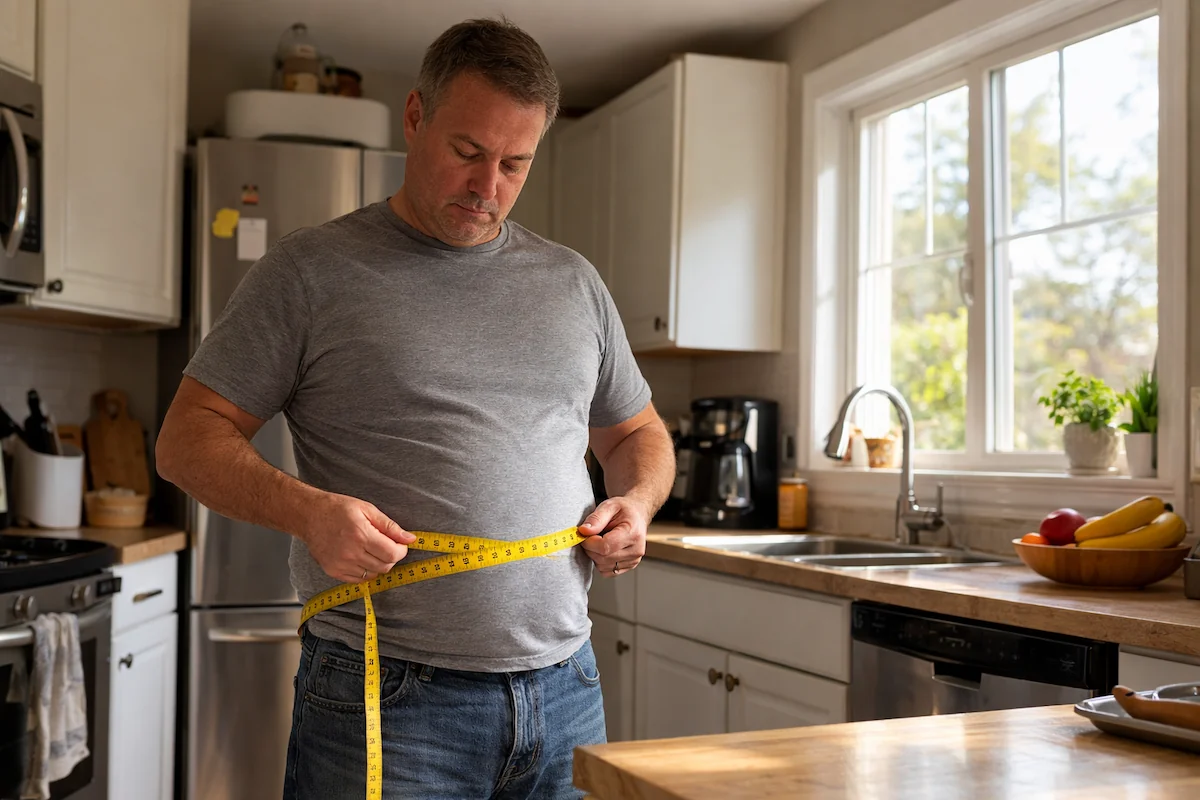
3.📏 Stubborn Belly Fat (Especially Around the Waist)
Not all fat is created equal. Visceral fat — the deep abdominal fat that accumulates around your organs — is both a symptom and a driver of insulin resistance.
High insulin levels signal your body to store fat, particularly in the abdominal region. This creates a vicious cycle: more belly fat → more inflammation → worse insulin resistance.
The key measurement:
- Waist circumference over 35 inches (women) or over 40 inches (men) is a clinical red flag for metabolic dysfunction, according to the American Heart Association.
4.🧠 Brain Fog and Difficulty Concentrating
Your brain is one of the most glucose-hungry organs in your body — it uses up to 20% of your total energy supply.
When insulin resistance disrupts glucose delivery to the brain, cognitive function takes a hit. Many people describe this as feeling like their brain is “in a fog.”
Symptoms include:
- Difficulty focusing or staying on task
- Forgetting words mid-sentence
- Feeling mentally “slow” or scattered
- Poor short-term memory

Research published in Neurology has linked insulin resistance to an increased risk of cognitive decline — making early detection critically important.
5.🩺 High Blood Pressure and Elevated Triglycerides
Insulin resistance doesn’t just affect your blood sugar. It creates a ripple effect across your entire metabolic system.
Chronically high insulin levels cause your kidneys to retain sodium, which raises blood pressure. At the same time, your liver converts excess glucose into triglycerides (blood fats).
Warning signs on your lab work:
- Fasting triglycerides above 150 mg/dL
- HDL (“good”) cholesterol below 50 mg/dL (women) or 40 mg/dL (men)
- Blood pressure consistently above 130/85 mmHg
This combination — high triglycerides, low HDL, and high blood pressure — is a hallmark of Metabolic Syndrome, which is essentially insulin resistance at an advanced stage.
6.⚫ Dark Patches of Skin (Acanthosis Nigricans)
This is one of the most visible and underrecognized signs of insulin resistance.
Acanthosis nigricans is a skin condition characterized by dark, velvety patches that typically appear in skin folds and creases, such as:
- The back of the neck
- The armpits
- The groin area
- Knuckles and elbows
These patches occur because high insulin levels stimulate the rapid growth of skin cells, causing them to darken. If you notice unexplained dark patches in these areas, it’s worth discussing with your doctor.
7.😤 Difficulty Losing Weight — Despite Diet and Exercise
This is perhaps the most frustrating sign of insulin resistance, and it’s the one that sends most people to the doctor.
When insulin levels are chronically elevated, your body is essentially stuck in “fat storage mode.” Even when you eat in a calorie deficit, high insulin actively blocks your ability to burn stored fat for fuel.
The pattern looks like this:
- You reduce calories but the scale barely moves
- You lose weight initially, then hit a plateau almost immediately
- You gain weight back quickly after stopping a diet
- Low-fat diets seem to make things worse
This is why simply “eating less and moving more” often fails for people with insulin resistance. The hormonal environment needs to be addressed first.
Addressing the hormonal environment is the key to breaking this cycle.
How to Fix Insulin Resistance Naturally
The powerful truth about insulin resistance is that it is highly reversible — especially when caught early. Here are the most effective, evidence-based strategies:
🥦 1. Prioritize Protein and Fiber at Every Meal
Protein and fiber slow glucose absorption dramatically, reducing post-meal insulin spikes. Aim for 25–35g of fiber per day and at least 20–30g of protein per meal. See our complete guide on the best foods for insulin resistance to know exactly what to eat. For a deeper dive into protein specifically, see our complete guide on the best protein sources for blood sugar.
🚶 2. Walk After Every Meal

A 10-minute post-meal walk causes your muscles to absorb glucose without insulin — one of the most effective ways to lower blood sugar naturally — reducing your glucose response by up to 30%, according to research in Sports Medicine.
For a complete breakdown of the walking after meals benefits, read our dedicated guide
🏋️ 3. Build Muscle Through Resistance Training
Skeletal muscle is your body’s largest glucose disposal site. More muscle = a bigger “sponge” for absorbing blood sugar. Even 2–3 sessions of resistance training per week makes a significant difference.
😴 4. Prioritize Sleep (7–9 Hours)
Just one night of poor sleep can reduce insulin sensitivity by up to 25%, according to research from the University of Chicago. Sleep is non-negotiable for metabolic health. For a complete breakdown of how stress affects blood sugar, read our dedicated guide.
🫙 5. Consider Evidence-Backed Supplements
Certain natural compounds have strong clinical evidence for improving insulin sensitivity, including:
- Berberine — some studies suggest it may significantly improve blood sugar control and insulin sensitivity
- Magnesium — deficiency is strongly linked to insulin resistance
- Alpha-Lipoic Acid (ALA) — a powerful antioxidant that improves glucose uptake
(We’ll cover each of these in depth in upcoming posts in our Supplements section.)
For those interested in natural supplementation, read our in-depth guide on berberine for insulin resistance — one of the most studied compounds for metabolic health.
When to See a Doctor
If you recognize 3 or more of these signs in yourself, it’s worth requesting a full metabolic panel from your doctor. Ask specifically for:
- Fasting glucose (goal: under 100 mg/dL)
- Fasting insulin (goal: under 10 µIU/mL)
- HbA1c (goal: under 5.7%)
- Triglycerides and HDL cholesterol
To understand what your glucose should look like after meals, read our guide on blood sugar after eating. For a complete breakdown of what these numbers mean, read our guide on blood sugar when fasting.

Early detection is everything. Prediabetes and insulin resistance are reversible. Type 2 diabetes, once established, is much harder to manage.
Who Is Most at Risk for Insulin Resistance?
While insulin resistance can affect anyone, certain groups are significantly more likely to develop it. You may be at higher risk if you:
- Are over 40 years old — insulin sensitivity naturally declines with age
- Have excess belly fat — visceral fat is both a cause and a symptom
- Have PCOS (Polycystic Ovary Syndrome) — strongly linked to insulin resistance
- Have a family history of type 2 diabetes — genetics play a significant role
- Lead a sedentary lifestyle — lack of movement reduces glucose disposal
- Have a history of poor sleep — even short-term sleep deprivation worsens insulin sensitivity
- Eat a diet high in processed carbs and sugar — the number one dietary driver
Are you a woman experiencing these signs? The symptoms of insulin resistance can look and feel very different in females — read our dedicated guide on insulin resistance symptoms in females.
The good news? Even if you fall into one or more of these categories, the signs of insulin resistance can be reversed with the right lifestyle changes.
Frequently Asked Questions (FAQ)
1. What is the earliest sign of insulin resistance?
The earliest and most common signs of insulin resistance include post-meal fatigue — feeling exhausted 30 to 60 minutes after eating, even after a normal meal. This happens because your cells are struggling to absorb glucose efficiently.
2. Can insulin resistance be reversed naturally?
Yes. The signs of insulin resistance are highly reversible, especially when caught early. The most effective strategies include walking after meals, building muscle through resistance training, prioritizing protein and fiber, and getting 7–9 hours of sleep per night.
3. How long does it take to fix insulin resistance?
Most people who recognize the signs of insulin resistance early see measurable improvements in insulin sensitivity within 4 to 12 weeks of consistent lifestyle changes. However, results vary depending on the severity of resistance and individual factors.
4. What foods should I avoid if I have insulin resistance?
Avoid rapidly digested carbohydrates such as white bread, sugary drinks, pastries, and processed snacks. These cause sharp blood sugar spikes that worsen the signs of insulin resistance over time.
5. Is insulin resistance the same as diabetes?
No. The signs of insulin resistance are a precursor to type 2 diabetes, but they are not the same condition. With the right lifestyle changes, insulin resistance can be reversed before it progresses to diabetes.
The Bottom Line
If you recognize these signs of insulin resistance in yourself, don’t wait.
Insulin resistance rarely announces itself with a dramatic symptom. If your symptoms suggest your blood sugar may already be in the prediabetes range, read our guide on prediabetes symptoms. Instead, it whispers — through afternoon energy crashes, stubborn belly fat, and relentless sugar cravings.
Now that you know the 7 early signs of insulin resistance, you have the power to act before it becomes a bigger problem.
The path forward isn’t about perfection. It’s about making smarter daily choices — one meal, one walk, one good night of sleep at a time.
Your metabolism is not broken. It just needs the right signals.
“If something in this article felt familiar, please don’t ignore it. Early signs are your body’s way of asking for help before things get harder to reverse. The fact that you’re here, reading this, already puts you ahead. Knowledge is the first step — and you’ve already taken it.”
— Sarah Mitchell
Sources & Scientific References
Centers for Disease Control and Prevention (CDC): National Diabetes Statistics Report — Current data on prediabetes prevalence and the importance of lifestyle awareness.
American Heart Association: Metabolic Syndrome — Symptoms and Diagnosis — Official guidelines for identifying insulin resistance and cardiovascular risk factors.
American Diabetes Association (ADA): Standards of Care in Diabetes — The global clinical benchmark for managing blood sugar through nutrition and lifestyle.
Harvard T.H. Chan School of Public Health: The Nutrition Source — Carbohydrates and Blood Sugar — Explains the glycemic index and how complex carbohydrates impact glucose levels.
Neurology Journal: Insulin Resistance and Cognitive Decline — Scientific research highlighting the connection between metabolic health and long-term brain function.
Sports Medicine: Post-meal walking and glycemic response — Evidence-based meta-analysis confirming the benefits of short walks for stabilizing post-meal glucose.
University of Chicago Medicine: Sleep Deprivation and Insulin Sensitivity — Clinical studies demonstrating the direct impact of sleep quality on glucose metabolism.
Medical Disclaimer: The information provided on BioHealth Source is for educational and informational purposes only and does not constitute medical advice. Always consult with a qualified healthcare professional before making significant changes to your diet, exercise routine, or if you have questions regarding a medical condition.
Affiliate Disclosure: This post may contain affiliate links. If you click on one of these links and make a purchase, we may receive a small commission at no extra cost to you. This helps support our research and content creation. We only recommend products we truly believe in.