
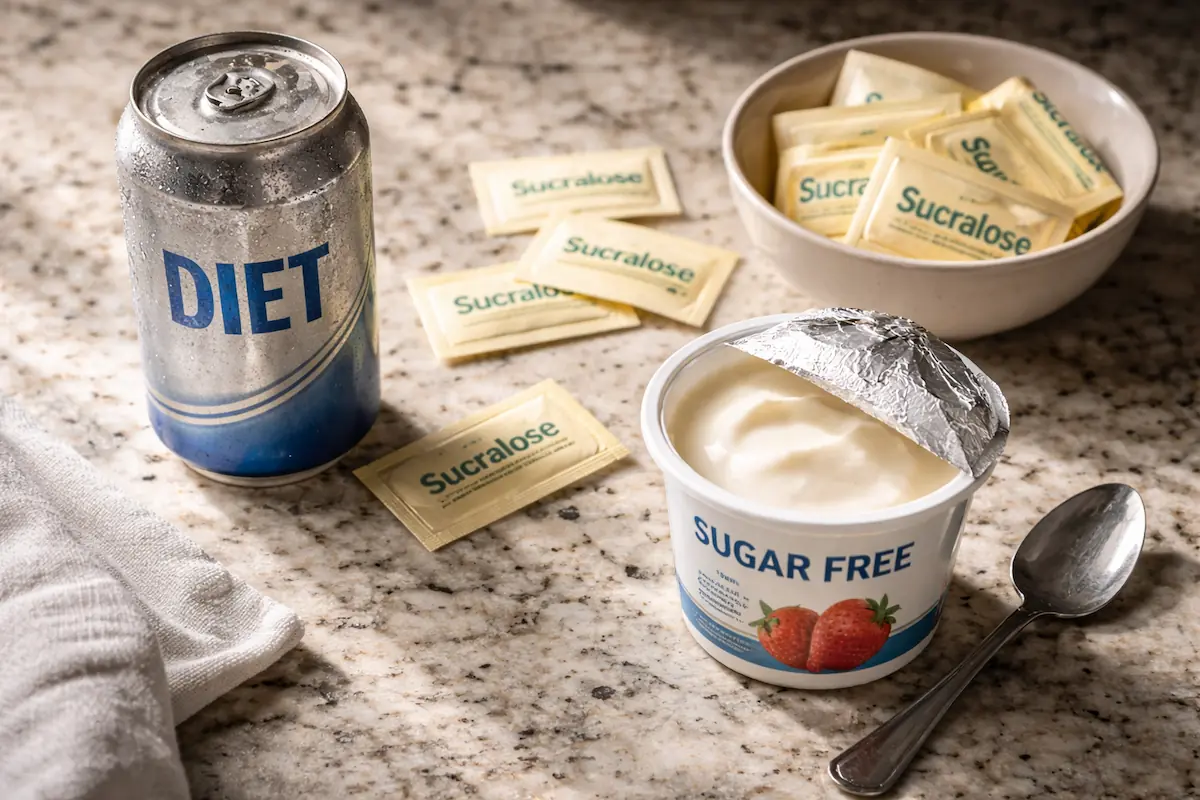
At BioHealth Source, our editorial focus is on metabolic health — helping you better understand insulin resistance, balance hormones, and support your energy, naturally. Welcome.
Quick Answer:
Most artificial sweeteners don’t raise blood glucose directly — but they can trigger an insulin response through taste receptors, disrupt gut bacteria with regular use, and increase cravings. Sucralose, aspartame, and saccharin carry the most risk. For people managing blood sugar or prediabetes, stevia and monk fruit are significantly safer alternatives.
The relationship between artificial sweeteners and blood sugar is more complicated than most people think. You swapped regular soda for diet soda. You switched sugar for sucralose in your coffee. You started buying “sugar-free” everything.
And yet — your blood sugar is still not where you want it to be.
If that sounds familiar, you’re not alone. Millions of people make the switch to artificial sweeteners believing they’ve solved the sugar problem. And in one narrow sense, they have: zero calories, no glucose spike. But blood sugar control is about more than glucose. It’s also about insulin — and that’s where the story gets a lot more interesting. Understanding this interaction is the first step to making smarter choices.
This guide breaks down exactly what artificial sweeteners do to your blood sugar and insulin levels, which ones are most likely to cause problems, and which alternatives actually support your metabolic health.
If you’re managing prediabetes or insulin resistance, read our guide on prediabetes symptoms first — it gives you the full picture of what’s happening in your body before diving into this one.
The “Zero Calories” Assumption — Why It’s Incomplete
Here’s the logic most people follow:
Sugar → raises blood glucose → triggers insulin → stored as fat → bad.
Artificial sweetener → no calories → no glucose → no insulin → safe.
It’s clean. It’s intuitive. And it’s only partially true.
The problem is that your body doesn’t just respond to calories. It responds to sweetness itself — and that distinction matters more than most people realize.
When you taste something sweet — whether it’s a spoonful of sugar or a sip of diet soda — your brain and gut immediately start preparing your body to receive sugar. Saliva increases. Digestive enzymes activate. And in many people, the pancreas begins releasing a small amount of insulin before a single calorie ever enters the bloodstream.
This is called the cephalic phase insulin response — and it’s one of the most underappreciated mechanisms in blood sugar science. Your body is essentially saying: “Something sweet is coming. Get ready.”
The insulin spike comes before the food even arrives. And with artificial sweeteners, the food never arrives — but the insulin response already happened. This is why it goes far beyond the calorie count on the label.
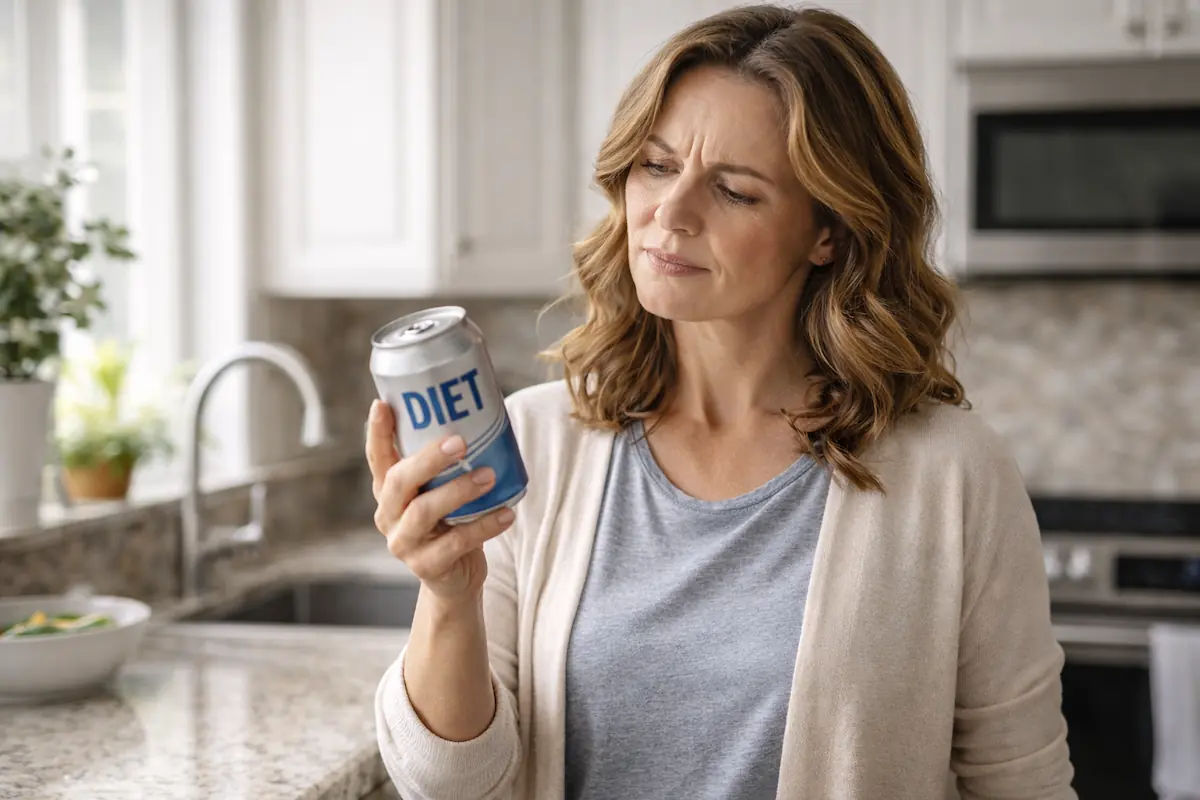
What Happens in Your Body When You Drink a Diet Soda
Let’s walk through it step by step:
Step 1: You take a sip. The sweetness receptors on your tongue activate — they can’t tell the difference between real sugar and sucralose. Both register as “sweet.”
Step 2: Your brain sends a signal to your pancreas: insulin incoming.
Step 3: In some people, a small but measurable insulin release happens — without any glucose arriving to match it.
Step 4: Blood sugar drops slightly (because insulin is circulating with nothing to process). This can trigger hunger and cravings — especially for sweet or starchy foods — within 30 to 60 minutes.
Step 5: You eat more than you intended to. The “zero calorie” drink may have contributed to a higher-calorie afternoon.
This sequence doesn’t happen in everyone, and it doesn’t happen equally with all sweeteners. But it happens often enough — and consistently enough in research — to be worth understanding.
The Gut Connection: Why Long-Term Use Is a Different Story
A single diet soda probably won’t derail your metabolic health. But years of regular artificial sweetener use may contribute to a problem that’s harder to see: changes in your gut microbiome.
Your gut is home to trillions of bacteria that play a direct role in how well your body manages blood sugar. A healthy, diverse microbiome helps regulate insulin sensitivity, inflammation, and glucose metabolism. When that balance is disrupted — a state called dysbiosis — insulin resistance tends to worsen over time.
Several studies have shown that sweeteners like sucralose and saccharin can alter the composition of gut bacteria in ways that negatively affect blood sugar control. One landmark study published in Nature found that saccharin consumption in mice led to significant glucose intolerance — and when they transplanted the altered gut bacteria from those mice into healthy mice, the same glucose intolerance appeared.
Human follow-up studies have shown similar (though more modest) effects, particularly with high and sustained intake.
The takeaway: the gut microbiome connection is real, it’s dose-dependent, and it’s one of the strongest arguments for choosing natural sweetener alternatives when possible. For anyone managing prediabetes, understanding how artificial sweeteners affect blood sugar long-term is just as important as avoiding sugar itself.

The Top 3 Artificial Sweeteners to Limit
Not all sweeteners are equal. Here’s a breakdown of the three most common ones and what the research actually shows:
Here’s how the most common sweeteners compare:
| Sweetener | Found In | Blood Sugar Impact | Concern Level |
|---|---|---|---|
| Sucralose (Splenda) | Diet drinks, baked goods, protein powders | May raise insulin by up to 20% in some studies; worsens gut microbiome with sustained use | ⚠️ High |
| Aspartame (Equal, NutraSweet) | Diet sodas, sugar-free gum, tabletop sweeteners | Triggers cephalic insulin response; linked to arterial inflammation in recent animal studies | ⚠️ Moderate–High |
| Saccharin (Sweet’N Low) | Packets, some diet foods, medications | Strongest evidence for gut microbiome disruption and glucose intolerance with regular use | ⚠️ High |
A Note on Sucralose Specifically
Sucralose deserves extra attention if you’re managing insulin resistance or prediabetes. A 2013 study gave participants either sucralose or water before a glucose tolerance test. Those who consumed sucralose showed insulin levels roughly 20% higher — and cleared that insulin from their blood more slowly. For someone already dealing with elevated insulin, adding more on top of it is exactly the wrong direction. This makes sucralose one of the most concerning artificial sweeteners for blood sugar control.
The effect is amplified when sucralose is consumed alongside carbohydrates — which is how most people use it (stirred into oatmeal, blended into smoothies, mixed into protein shakes with fruit).
The Safer Alternatives: What to Use Instead
The good news: you don’t have to choose between sugar and sweeteners that may be working against you. There are genuinely blood-sugar-friendly options that have solid research behind them.
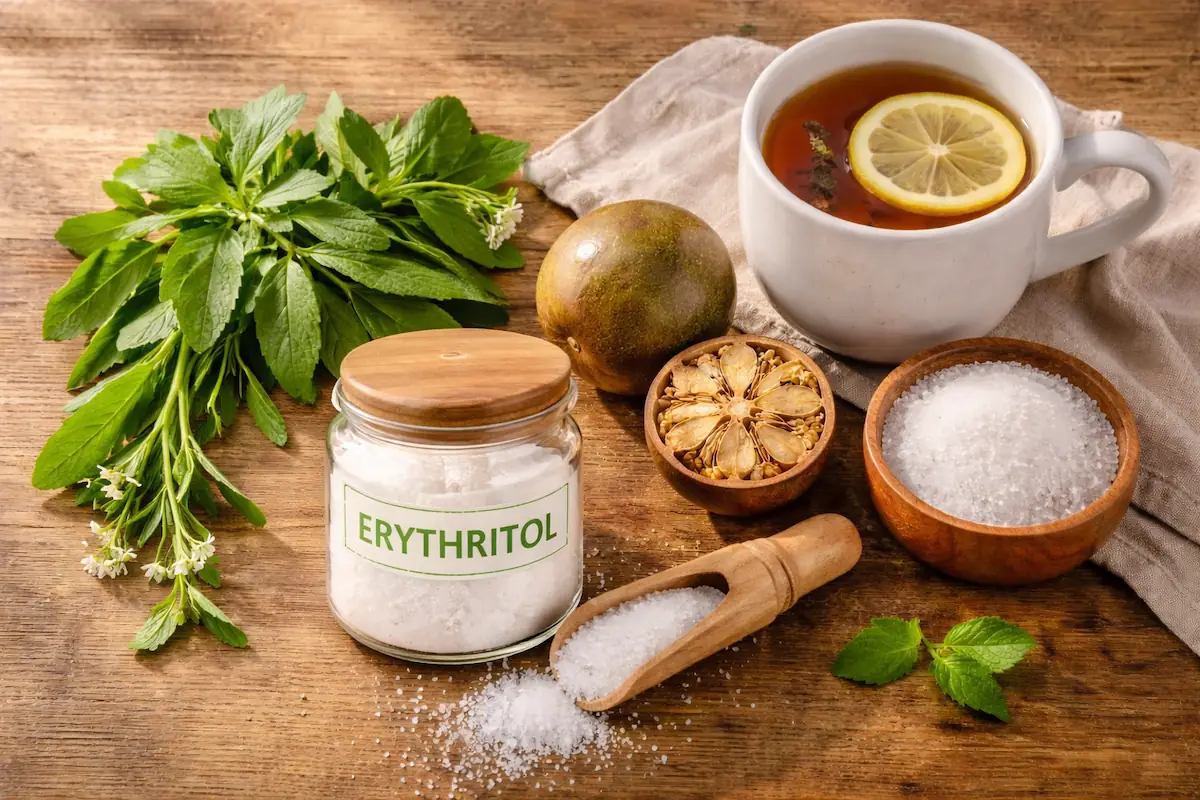
Stevia — The Gold Standard
Stevia is extracted from the leaves of the Stevia rebaudiana plant and has been used for centuries in South America. Unlike synthetic sweeteners, stevia does not appear to trigger a cephalic insulin response in most people, and several studies show it may actually improve insulin sensitivity with regular use.
It has zero glycemic impact, doesn’t disrupt gut bacteria, and is available in liquid drops, packets, and granulated form. Look for pure stevia extract — avoid brands that blend stevia with maltodextrin (a filler that does spike blood sugar).
Monk Fruit — The Rising Star
Monk fruit sweetener (also called luo han guo) comes from a small melon grown in Southeast Asia. It’s 150 to 200 times sweeter than sugar, has zero calories, and produces no measurable blood glucose or insulin response.
Research on monk fruit is more limited than stevia, but what exists is promising. It also contains natural antioxidant compounds called mogrosides, which may have mild anti-inflammatory effects. It’s widely available in granulated and liquid form, and blends well in both hot and cold drinks.
Erythritol — With One Caveat
Erythritol is a sugar alcohol that occurs naturally in small amounts in some fruits. It has about 70% of the sweetness of sugar, nearly zero calories, and a glycemic index of zero — meaning it doesn’t raise blood sugar or insulin.
The caveat: a 2023 study published in Nature Medicine found an association between higher blood erythritol levels and increased cardiovascular risk. The research raised important questions, though it was observational and didn’t prove causation. For now, erythritol in moderate amounts appears safe — but using it as your primary sweetener every day may warrant more caution until longer-term studies are available.
| Sweetener | Glycemic Index | Insulin Response | Gut Impact | Verdict |
|---|---|---|---|---|
| Stevia | 0 | Minimal to none | Neutral or positive | ✅ Best choice |
| Monk Fruit | 0 | None detected | Neutral | ✅ Excellent |
| Erythritol | 0 | None | Neutral | ⚠️ OK in moderation |
| Sucralose | 0 | May spike 20%+ | Negative | ❌ Limit |
| Aspartame | 0 | Cephalic response | Possibly negative | ❌ Limit |
| Saccharin | 0 | Cephalic response | Most disruptive | ❌ Avoid |
The Real Goal: Retraining Your Sweet Tooth
Here’s something the sweetener industry doesn’t advertise: the more frequently you consume intensely sweet things — whether from sugar or from artificial sweeteners — the higher your sweetness threshold becomes. You need more sweetness to feel satisfied.
This is why many people who switch to diet drinks still struggle with sugar cravings. The brain’s dopamine response to sweetness adapts — and keeps asking for more.
The most sustainable long-term strategy isn’t finding a “better” sweetener. It’s gradually reducing your overall sweetness intake so that naturally sweet foods — a handful of berries, a square of dark chocolate, a ripe peach — feel genuinely satisfying again.
That said, if you need a sweetener, choose stevia or monk fruit. They give you the sweetness without the metabolic cost.
For practical, step-by-step strategies on naturally lowering your blood sugar without relying on sweet substitutes, read our guide on how to lower blood sugar naturally.
Practical Swaps You Can Make This Week
You don’t have to overhaul everything at once. Start with these:
- Diet soda → sparkling water with a squeeze of lemon or lime. The carbonation satisfies the same craving without any sweetener at all.
- Sucralose in coffee → pure liquid stevia. One or two drops goes a long way.
- “Sugar-free” flavored yogurt → plain Greek yogurt with a few blueberries. Less sweet overall, more fiber, more protein, better blood sugar response.
- Protein powder with sucralose → stevia-sweetened protein powder. Most major brands now offer stevia-sweetened versions.
- Sugar-free syrup → a small drizzle of real maple syrup. Counterintuitive, but a teaspoon of the real thing may be better for your gut and your cravings than a tablespoon of artificial syrup.
These aren’t all-or-nothing changes. Every swap you make reduces the cumulative sweetener load on your system.
Frequently Asked Questions
Does diet soda raise blood sugar?
Not directly — artificial sweeteners and blood sugar don’t interact the way most people assume. Diet sodas don’t contain glucose, so they won’t cause a measurable rise on a glucometer. However, they may trigger a small insulin response through the cephalic phase mechanism, and regular consumption has been linked to gut microbiome changes that worsen insulin sensitivity over time.
Is sucralose safe for people with prediabetes?
It’s one of the more concerning options for anyone managing blood sugar. The evidence suggests it can raise insulin response — especially when consumed alongside carbohydrates — and may disrupt gut bacteria with sustained use. Stevia or monk fruit are significantly better choices.
Can I use stevia every day?
Current research suggests yes — stevia appears to be the safest daily-use sweetener for people managing blood sugar. Unlike synthetic sweeteners, it doesn’t appear to negatively affect the gut microbiome and may have mild insulin-sensitizing properties.
What about honey or maple syrup — are they better than artificial sweeteners?
They’re real food, which makes them preferable from a gut health standpoint. But they still raise blood sugar and insulin — just with a slightly lower glycemic index than refined sugar. In small amounts (a teaspoon), they’re fine. As a daily sweetener in large quantities, they’re not a free pass.
Are artificial sweeteners in medications a concern?
Medications that contain saccharin or other sweeteners as fillers are generally at too low a dose to cause meaningful metabolic effects. The concern is primarily with regular dietary consumption — drinks, foods, and tabletop sweeteners used multiple times per day.
I’ve been using artificial sweeteners for years. How do I transition away?
Gradually. Start by replacing one source at a time — your morning coffee first, then afternoon drinks, then any sugar-free foods in your routine. The goal is to reduce your overall sweetness threshold over 4 to 6 weeks, not to eliminate all sweetness overnight. Your palate adapts faster than you’d expect.
The Bottom Line
The relationship between artificial sweeteners and blood sugar is not black and white. They are not the villain they’re sometimes made out to be — but they’re also not the free pass most people assume.
The zero-calorie promise is real. The zero-consequence assumption is not. And that’s where most people get stuck.
For people managing blood sugar, prediabetes, or insulin resistance, the most important takeaway is this: not all sweeteners are equal, and the ones most widely used — sucralose, aspartame, and saccharin — carry more metabolic risk than most people realize.
Switching to stevia or monk fruit is a simple, practical upgrade that doesn’t require any sacrifice. And if you can gradually reduce your overall need for sweetness, your blood sugar, your gut, and your cravings will all thank you for it. Choosing the best sweeteners for blood sugar — stevia and monk fruit — is one of the simplest upgrades you can make today.
For the full picture on managing blood sugar through diet, read our guide on how to lower blood sugar naturally — and if you’re following a structured meal plan, see how sweeteners fit into the prediabetes diet framework.
“One of the most common mistakes I see is people switching from sugar to artificial sweeteners and assuming the problem is solved. The label says zero calories — but your body reads it differently. If you’re going to use a sweetener, use stevia or monk fruit, keep it minimal, and focus on training your palate to need less sweetness overall. That’s the real win.”
— BioHealth Source Editorial Team
Sources & Scientific References
Suez J et al. (2014) — Artificial sweeteners induce glucose intolerance by altering the gut microbiota: A foundational study published in Nature that first established the link between non-caloric sweeteners and gut bacteria disruption.
Pepino MY et al. (2013) — Sucralose affects glycemic and hormonal responses to an oral glucose load: A landmark clinical trial in Diabetes Care demonstrating for the first time that sucralose is not metabolically inert in humans.
Cao Y et al. (2025) — Sweetener aspartame aggravates atherosclerosis through insulin-triggered inflammation: A recent study from Cell Metabolism investigating the link between aspartame and insulin-related inflammation.
Yamada T et al. (2022) — Is the Use of Artificial Sweeteners Beneficial for Patients with Diabetes Mellitus? A comprehensive review from PMC assessing the real impact of synthetic sugar substitutes on diabetic patients.
Witkowski M et al. (2023) — The artificial sweetener erythritol and cardiovascular event risk: An important study in Nature Medicine regarding the safety profile and cardiovascular effects of erythritol.
American Diabetes Association – Diabetes Care — Clinical Care / Education / Nutrition Research: The official research journal of the ADA, providing open access to peer-reviewed studies on how nutrition and non-nutritive sweeteners affect metabolic responses.
Harvard T.H. Chan School of Public Health — The Nutrition Source: An evidence-based overview of the nutritional impact and safety of low-calorie sweeteners.
Medical Disclaimer: The information provided on BioHealth Source is for educational and informational purposes only and does not constitute medical advice. Always consult with a qualified healthcare professional before making significant changes to your diet, exercise routine, or if you have questions regarding a medical condition.
Affiliate Disclosure: This post may contain affiliate links. If you click on one of these links and make a purchase, we may receive a small commission at no extra cost to you. This helps support our research and content creation. We only recommend products we truly believe in.